

I have to be upfront about something: I came into MLB The Show 26 as an outsider. Not just a newcomer to the franchise — a genuine outsider to the sport itself. Baseball, as anyone from Portugal will tell you, is not exactly the national conversation. We grew up watching football. We argued over Benfica and Porto. We knew who Ronaldo was before we knew what a home run was. So when I sat down with San Diego Studio’s latest baseball simulation on PlayStation 5, I wasn’t entirely sure what to expect — or whether I’d be able to appreciate what was being offered.
What I found was one of the most technically accomplished, mechanically rich, and genuinely educational sports games I have ever played. MLB The Show 26 is not simply a simulation of baseball. It is, at its best, a masterclass in how to make a sport feel alive — its rhythms, its pressures, its culture, and its history — in a way that reaches far beyond any geographic or cultural barrier. After hours behind the plate, on the mound, and in the dugout, I emerged with a genuine respect for the sport and a deep admiration for what San Diego Studio has built over decades of iteration.
A technical and emotional triumph — the most complete baseball game ever made.
A Sport I Never Grew Up With
There is something almost meditative about baseball that you don’t fully grasp until you play it. From the outside, it can appear static — players standing around, waiting, the occasional burst of action. But MLB The Show 26 dismantles that misconception pitch by pitch. Every at-bat is a psychological duel. Every rotation of the pitcher’s wrist, every split-second decision at the plate, every relay throw from left field — these are moments layered with consequence that the game communicates brilliantly.
Coming from a country where the sport barely registers, this game served as my university. The menus, the tutorials, the commentary — all of it conspires to make you feel like you are being brought into the fold rather than expected to already belong. That is no small feat for an annual sports title. And crucially, MLB The Show 26 doesn’t condescend. It educates through play. Within a few hours, I found myself understanding pitch counts, arguing with the umpire through the new ABS Challenge system, and reading defensive alignments as naturally as I would read a football formation.
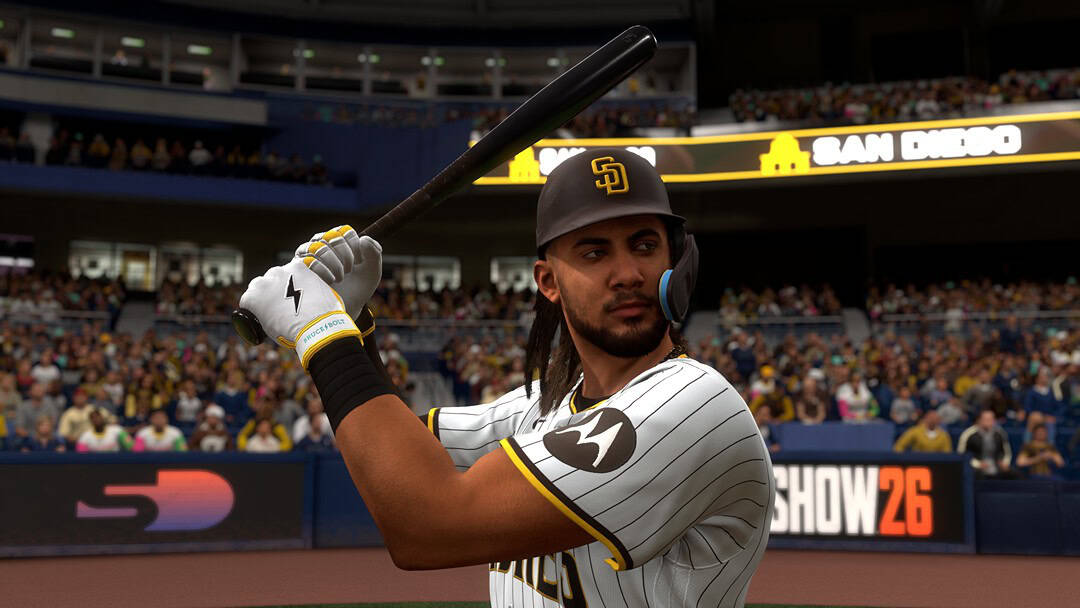
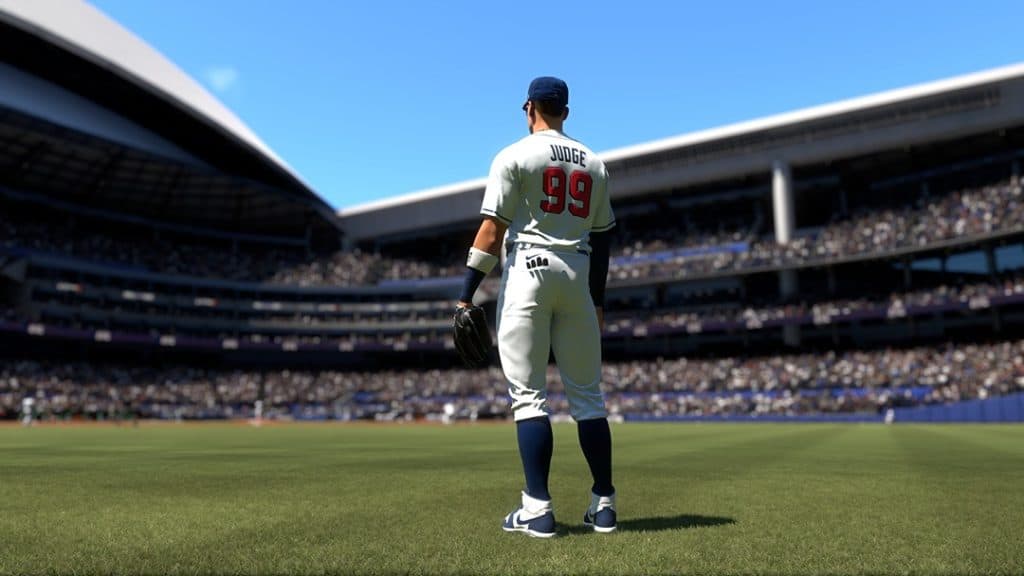
This year’s edition — developed by San Diego Studio and published by Sony Interactive Entertainment alongside MLB Advanced Media — is the most ambitious the series has ever been. Cover athlete Aaron Judge, the New York Yankees captain and 2025 AL MVP, returns for only the second time in franchise history, this time in his Team USA World Baseball Classic uniform. The symbolic choice is deliberate: this is a version of The Show that wants to reach beyond its traditional audience. It wants to be about baseball as a global sport, not just an American one.
The World Baseball Classic integration, the Tokyo Dome as a playable stadium, and the expanded international presence within Diamond Dynasty all reinforce that message. For a Portuguese gamer sitting far from the bleachers of Yankee Stadium, it worked. It made me feel like there was a seat in this world with my name on it.
Road to Cooperstown: The Career Mode That Finally Goes All the Way
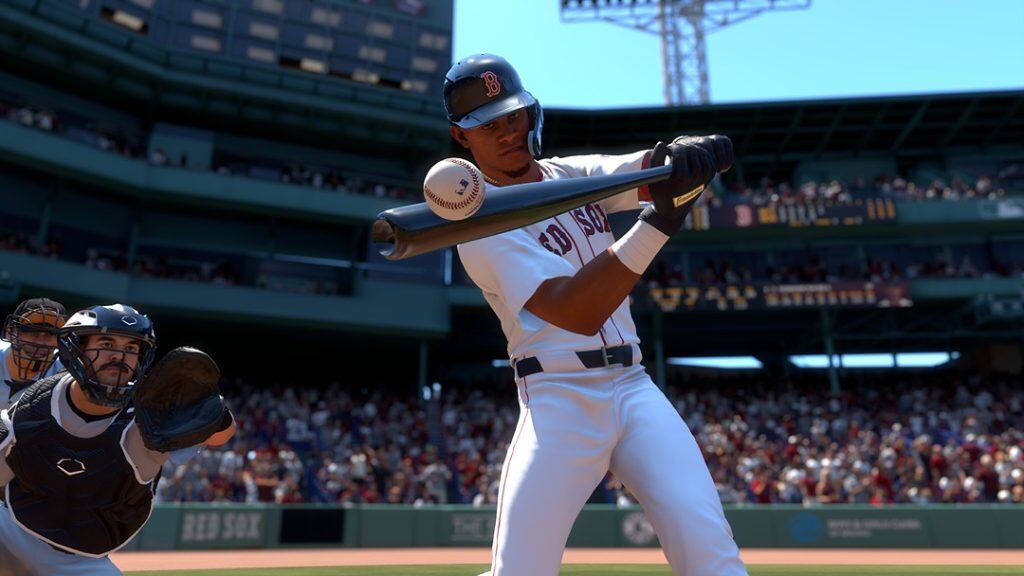
The headline feature of MLB The Show 26 is the sweeping overhaul of the career mode, now officially rebranded as Road to Cooperstown. And it earns the new name.
For the first time, players begin their journey earlier than ever, with an expanded amateur career path that places you in high school competition before the MLB Draft even becomes a consideration. You are a prospect. You need to be noticed. From there, your decisions — whether attending certain colleges, performing well at the MLB Draft Combine, or impressing scouts — can influence how your career develops. The added context transforms what was once a fairly mechanical grind into something that genuinely feels like a story with stakes.
The game now features 19 officially licensed college programmes, including the NCAA College World Series format and bracket. Playing through the College World Series before reaching the professional ranks adds a layer of pageantry and atmosphere that the series has never had before. The pageantry of college baseball — the different broadcast packages, the crowd energy, the sense that these are formative years — is handled with care. Boog and Singy join Jessica Mendoza in the NCAA broadcast booth to guide your journey to Omaha.
Once you reach the professional level, the mode doesn’t flatten out. Road to Cooperstown rebrands the career mode to switch focus toward building your own Hall of Fame-worthy legacy, instilling deeper meaning into the short and long-term goals you set and the achievements you earn. Dynamic narrative goals adapt to performance — your slumps matter, your rivalries develop, your heroics are remembered. New mastery effects, pitch visuals, and clutch “Heart Attack” perks make your journey feel personalised.
I played through the early stages of this mode for longer than I planned to. That is the most honest endorsement I can give it. There is something compellingly human about starting in a high school dugout with everything ahead of you, and slowly, game by game, building toward a name that people know. The fact that the destination — Cooperstown, the Hall of Fame — is explicitly framed as the finish line gives the whole experience a narrative weight that most career modes in sports games never manage to achieve.
Road to the Show is the most complete career mode the series has produced. As someone who has never cared about baseball in real life, I cared deeply about this fictional player. That is extraordinary.
On the Field: Strategic Depth Like Never Before
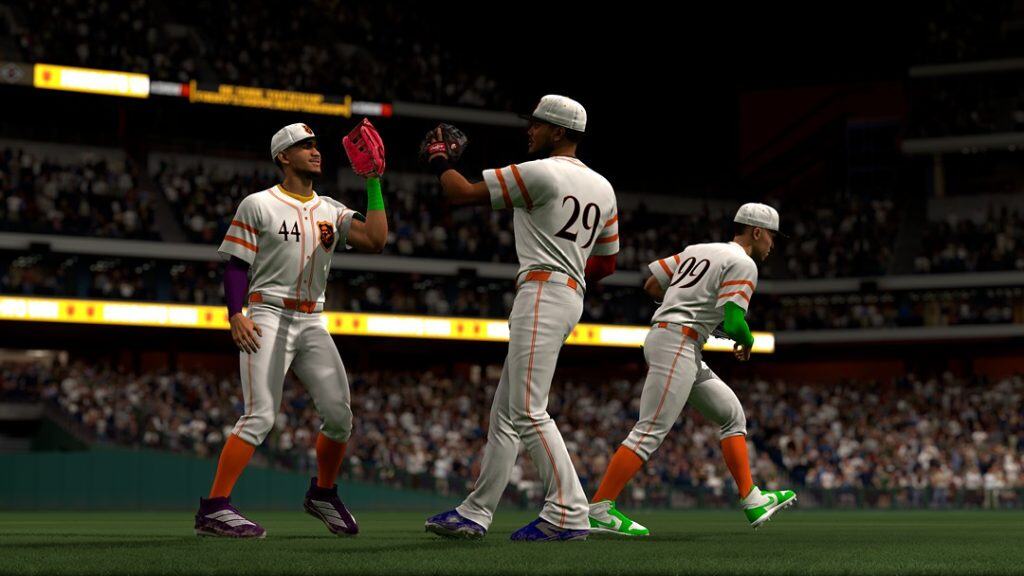
This is where MLB The Show 26 makes its most confident statement. The on-field experience has received a suite of mechanical upgrades that collectively represent the most meaningful leap in gameplay feel the series has made in years.
The new Bear Down Pitching system is the standout addition. This new pitching system introduces a limited focus resource that pitchers can activate during crucial moments, gaining increased accuracy and control over their pitches. Even high-rated pitchers can only store a handful of Bear Down Pitches at a time, meaning you must choose carefully: do you use this resource to escape a difficult inning early, or save it for a high-stakes encounter later in the game? For a first-time player, this single mechanic taught me more about the psychology of pitching than hours of reading could have. It transforms the mound into a resource management puzzle on top of a timing challenge, and it works beautifully.
On the offensive side, Big Zone Hitting expands the player’s control over swing placement. The mechanic simplifies aligning powerful hits when you correctly anticipate pitch location, rewarding skilful timing and positioning and creating more opportunities for dramatic home runs and clutch hits. Combined with the new Plate Coverage Indicator slider, hitters now have a level of input precision that feels earned rather than arbitrary.
Perhaps the most interesting real-world-inspired addition is the Automated Ball-Strike (ABS) Challenge system. Teams are granted two challenges per game to contest the home plate umpire’s calls. A successful challenge is retained, while a failed challenge is lost, adding a strategic “risk-reward” layer to high-leverage innings. This mirrors a system being trialed in real-world baseball, and its inclusion here gives the game a contemporary authenticity that is genuinely exciting.
For the first time, The Show also incorporates real-world pitch usage rates for every MLB pitcher. This means that rarely used pitches are harder to locate and control, reducing their accuracy and forcing pitchers to mix pitch types based on their real-life player counterparts. For someone learning the sport through the game, this feature is invaluable — it teaches you, implicitly, how each real pitcher actually works. It is simulation in the truest sense.
The on-field strategy changes are the most meaningful the series has introduced in years. Every decision matters more. More than 500 new gameplay animations have been added, from new infield throw trajectories and off-balance lunges to overhauled catchers who can now set up with one knee down. These details are subtle in isolation but cumulative in effect. The game simply moves more like real baseball than it ever has.
Diamond Dynasty and the World Baseball Classic
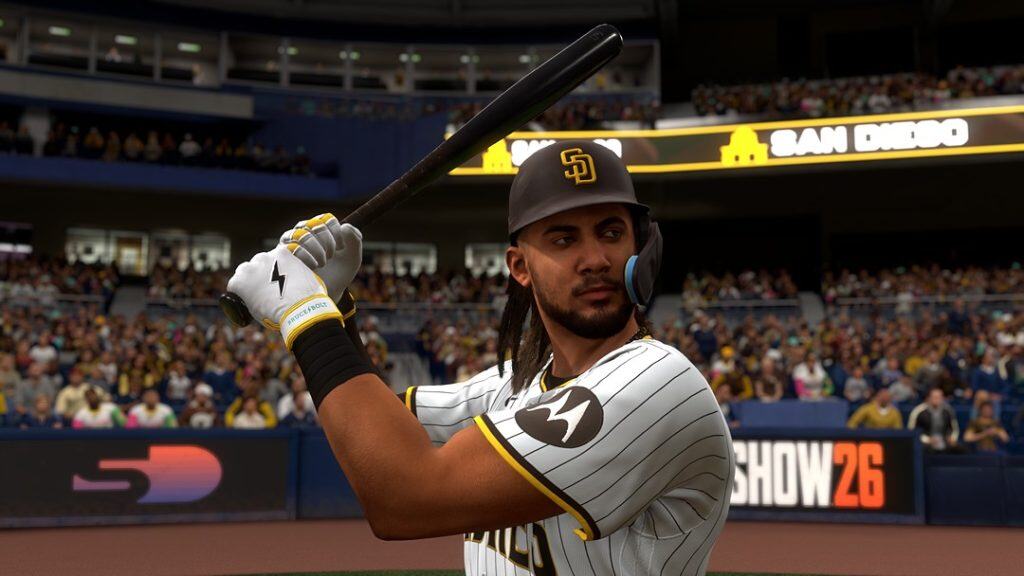
Diamond Dynasty — the franchise’s deep card-collecting and team-building mode — returns this year as the most fully loaded version of itself that the series has ever launched with.
The World Baseball Classic integration alone brings over 130 cards, full tournament play from the pool stage through to the championship, and the option to bring your Diamond Dynasty squad in to represent a nation. For a player from Portugal — where baseball is a novelty — seeing international teams, hearing about players from Japan, the Dominican Republic, Venezuela, and beyond, and competing in a genuinely global tournament framework is the closest this franchise has ever come to speaking to a non-American audience. It is a significant step.
Red Diamond cards introduce a new elite rarity tier at the top of the card hierarchy. Parallel Mods let you specialise your cards with contact, power, fielding, or speed upgrades as you parallel them up, which means every new card drop becomes a new puzzle to solve around your roster. The new 20-card ownership limit per player has generated debate in the community — some argue it stabilises the market, others that it inflates prices — but the intent to reduce hoarding and manipulation is a healthy one.
Diamond Dynasty’s Mini Seasons now allow players to choose between 3 or 9-inning games, as well as 7 or 28-game Mini Seasons, offering more control over pace and progression. This is a meaningful quality-of-life addition, particularly for players who don’t have the time to commit to a full 28-game grind. Team Affinity is better organised than it was last year, with every team starting with a hitter captain and a pitcher captain available from launch.
The Storylines: Negro Leagues Season 4 continues the series’ most culturally important tradition. Through a combination of historical narration, gameplay challenges, and archival material, the mode educates players about the athletes who helped shape the sport — figures whose contributions were often overlooked due to segregation in professional baseball. Players like John Henry ‘Pop’ Lloyd, George “Mule” Suttles, and Roy Campanella are celebrated here with the gravity and care they deserve. As someone approaching this sport fresh, this mode is also educational in the best possible way — it contextualises baseball within American history in a way that no textbook could.
That said, Diamond Dynasty remains, at its core, a grind. If card collecting and live-service progression are not your thing, this mode will not convert you. The grind is still the grind. But if you engage with it seriously, this is the most content the mode has ever offered at the start of a year.
Franchise Mode Grows Up

Franchise Mode has long been the most requested area for improvement among the series’ hardcore simulation community, and MLB The Show 26 delivers its most meaningful structural upgrade yet.
The new Trade HUB provides transparency into front-office decision-making. Instead of guessing what the AI values, players now engage with systems that resemble real MLB analytics departments. The new Trade Logic System introduces genuine depth to roster construction: you can track rumours, evaluate prospects, and make decisions that feel consequential rather than arbitrary. Early reports suggest the AI trade logic still has some quirks, but the infrastructure is now in place to support years of refinement.
Streamlined season options and Custom Game Entry make Franchise mode more flexible than ever — appealing to both hardcore simulation players and those with limited time. In Franchise Mode, real-time performance from pre-game storylines is integrated into the broadcast, keeping you updated on where you stand within your organisation and the league. New stat-casts like hit spray charts and pitch-usage breakdowns add an analytical layer that rewards attentive play.
For a newcomer, Franchise Mode is genuinely overwhelming at first — the volume of variables, sliders, and front-office decisions is substantial. But the game does enough to ease you in, and once the systems begin to click, managing a team across a multi-season arc is one of the most satisfying long-form experiences available in sports gaming today.
Presentation, Visuals, and the PS5 Treatment
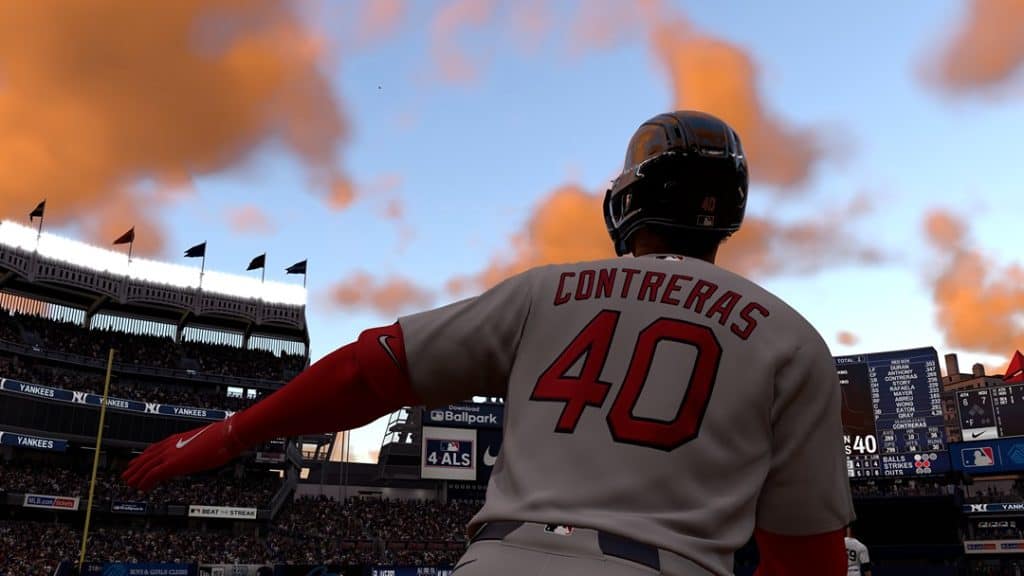
MLB The Show 26 targets 4K/60fps on PlayStation 5 with HDR support, and for the most part delivers. Player models are detailed, stadium environments are well reproduced, and the jersey physics are a nice new touch. The DualSense integration — haptic feedback for the crack of a bat, adaptive triggers on pitching — remains one of the best uses of PS5’s controller capabilities in any sports game.
However, the visual package is not without its limitations. Aliasing on edges is still visible, crowd detail still lags behind what you’d expect from a current-generation title, and there are no PlayStation 5 Pro enhancements, which is a strange omission for a first-party PlayStation release. After several years of refinement, the presentation is polished enough to feel immersive, but anyone expecting a generational visual leap will be disappointed.
Commentary has been refined with more contextual dialogue, and Robert Flores handling some mode-specific commentary adds variety. The broadcast infrastructure as a whole — the stat overlays, the pitch-usage breakdowns, the pre-game storylines — gives the game a genuine television feel that helps sell the experience at every level. The Prospect Organizational Depth Chart gives a visual representation of your performance game-to-game and week-to-week, tracking your progress to Cooperstown.
The authentic pitch call audio that plays through the controller — a new feature — is interesting but divisive. I found myself turning it down after a while; it adds atmosphere in theory, but can feel cluttered in practice. A minor complaint in an otherwise immersive audio experience.
The Verdict: Baseball’s Grand Ambassador
MLB The Show 26 is the most complete and mechanically sophisticated baseball game ever made. That is not a qualification — it is a statement. For fans of the series, this year’s edition delivers on almost every level: a career mode that now spans an entire sporting life, on-field mechanics that reward genuine strategic thinking, and a Diamond Dynasty mode more content-rich at launch than the series has ever offered.
For the outsider — the Portuguese gamer, the European who grew up with football and knows baseball only by name — this game is also, remarkably, a gateway. It is patient enough to educate, deep enough to reward, and culturally rich enough to make you feel that what you are playing matters beyond the scoreboard.
The lack of visual progression on PS5 remains a nagging concern for a first-party title in 2026. The grind within Diamond Dynasty still gatekeeps some of its most rewarding content. And the sheer volume of systems can be genuinely intimidating for new arrivals. But none of these are reasons to stay away.
This review is based on a review copy kindly obtained for press purposes. This access did not influence my opinion.The on-field strategy changes are the most meaningful the series has introduced in years. If you play this series for the baseball, this is the best it has felt in a long time. And if you’ve never played it for the baseball — if you’ve always watched from the outside, unsure whether there was a seat for you — MLB The Show 26 makes a compelling case that there is. It is, in the truest sense of the word, a sport made playable for the world.
MLB The Show 26 is a confident, deeply accomplished sports simulation that pushes the career mode and on-field mechanics to new heights. The visuals may not have kept pace, but the experience absolutely has.