
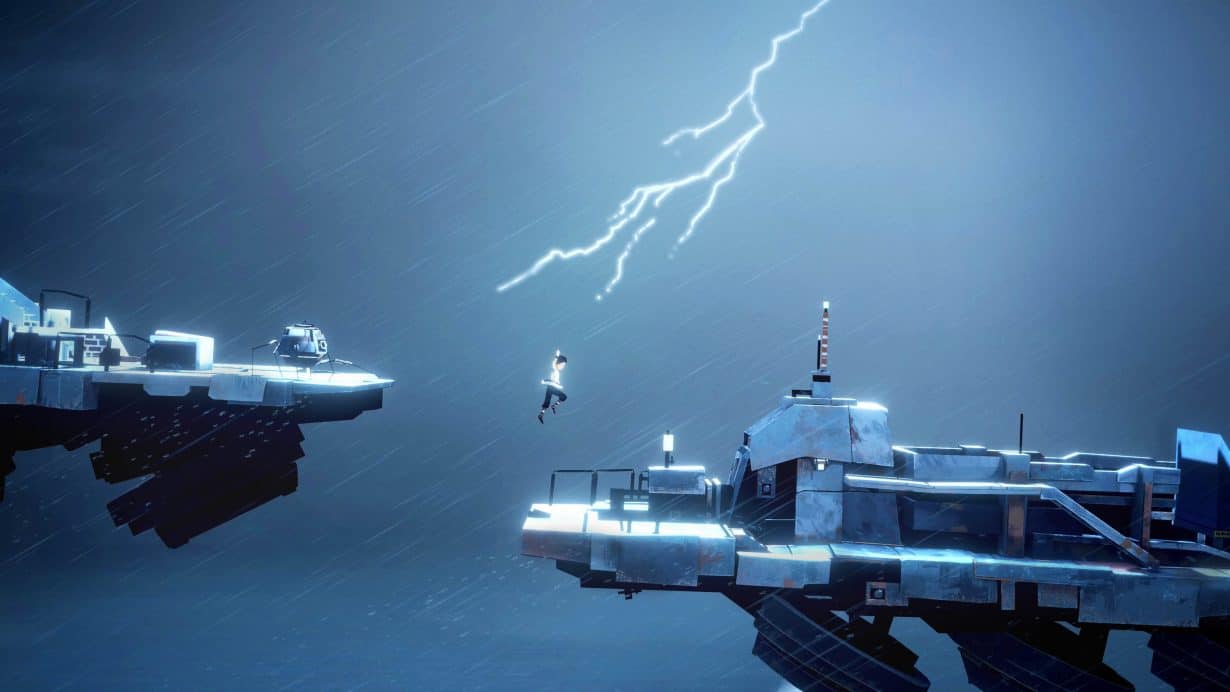

Planet of Lana II: Children of the Leaf is a rare sequel that doesn’t just recapture the magic of the original — it expands it in every meaningful direction, delivering one of the most beautiful and emotionally resonant games of 2026.
Disclosure: I was given a complimentary review key to facilitate this review. Receiving it did not impact my assessment.
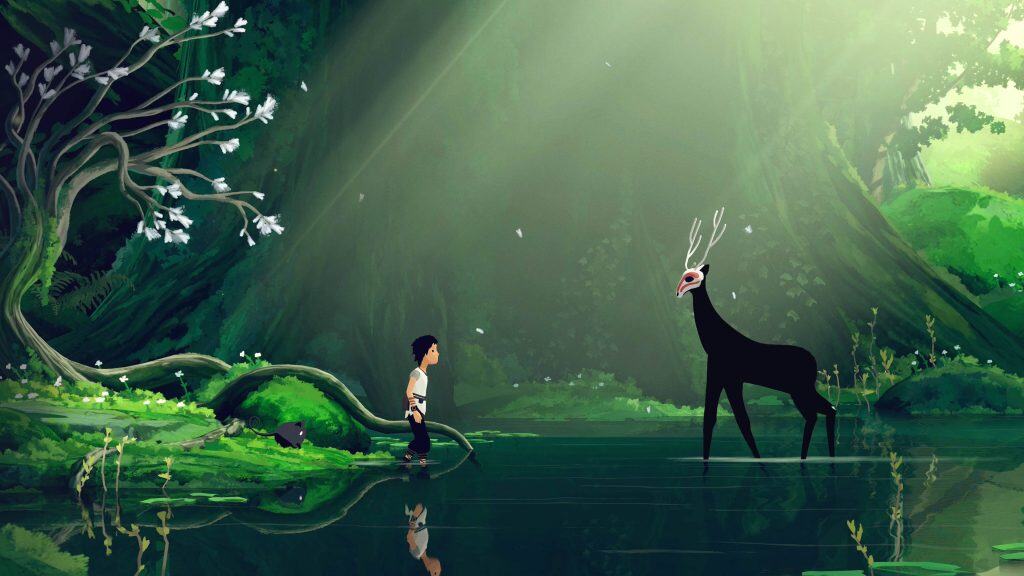
A cinematic puzzle adventure that speaks volumes without saying a word.
The original Planet of Lana was one of those games that stayed with me long after the credits rolled. Wishfully Studios’ debut — a handpainted cinematic platformer about a girl and her cat-like companion navigating a world overtaken by alien machines — was a brief, gorgeous thing. Beautiful and moving, yes, but also slightly frustrating in how quickly it ended, and how cautiously it played its puzzles. It left me wanting more in every sense. Planet of Lana II: Children of the Leaf is the answer to that longing, and what an answer it is. Bigger, bolder, more challenging, and more emotionally complex, this sequel from the Gothenburg-based studio doesn’t just build on the foundation of its predecessor — it transforms it into something far more ambitious. After spending the past several days guiding Lana and Mui through frozen peaks, ocean depths, ancient ruins, and haunted forests, I can say with confidence that Children of the Leaf is one of the finest cinematic puzzle-platformers I have ever played.
A World Reshaped: Setting and Story
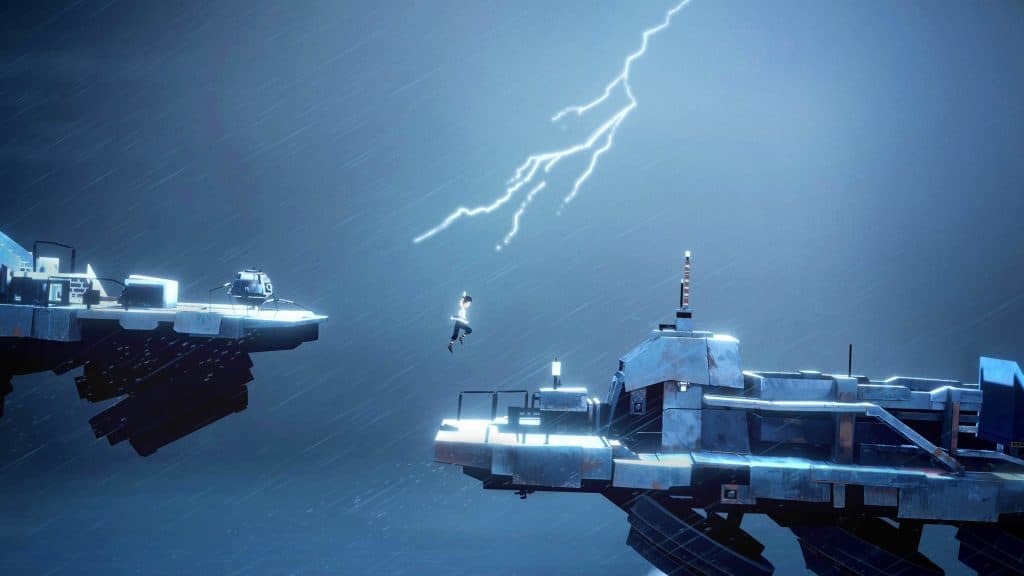
Children of the Leaf picks up after the events of the first game, with Lana and Mui’s home planet of Novo forever changed by the robot invasion they helped repel. But peace hasn’t exactly settled in. New technology left behind by the machines has been adopted by the planet’s tribes, and with it has come greed, power imbalances, and conflict. Where the first game presented a singular threat — a faceless mechanical army — this sequel paints a more nuanced picture. The danger now comes not only from machines but from people, and the story explores what happens when a world gains access to power it isn’t ready for.
It’s a darker, more mature narrative than the original, and it suits the older, more capable Lana. Time has passed, and both she and Mui have grown in ways that are reflected in their movement, their abilities, and their relationship. The story guides them through five chapters of escalating discovery, pushing deeper into Novo’s mysterious history and into questions about Mui’s own origins. Without spoiling anything, I’ll say that Children of the Leaf tackles themes of coexistence, responsibility, and the cost of progress with a surprising emotional sophistication — especially for a game that contains no spoken dialogue in any recognizable language.
That’s worth underlining: like its predecessor, Planet of Lana II tells its entire story without subtitles, without exposition, without a single word you can literally understand. Characters communicate through an invented alien tongue, through body language, through the world itself. The narrative is, as creative director Adam Stjärnljus has described it, another puzzle to solve — and what a rewarding one it is. Meaning emerges through careful observation: through the way Lana reaches for Mui in moments of fear, through environmental storytelling buried in ancient murals and crumbling architecture, through the swelling of Takeshi Furukawa’s extraordinary orchestral score at just the right moment. By the time the final act unfolds, I found myself moved in ways I didn’t expect. The game earns its emotional payoffs through restraint and trust in the player’s intelligence, which makes them hit all the harder.
Evolved Companionship: Gameplay and Puzzles
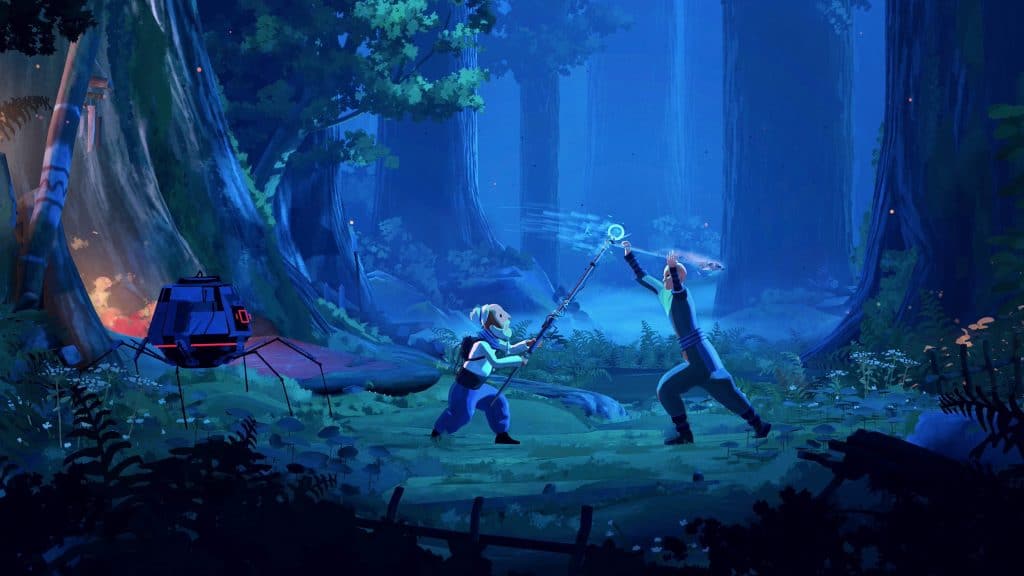
At its core, Planet of Lana II is still a side-scrolling puzzle-platformer built around the partnership between Lana and Mui. You direct Mui to specific locations, use their unique abilities to manipulate the environment, and work together to navigate obstacles that neither could overcome alone. But the sequel evolves this formula substantially, and the improvements are felt from the very first chapter.
The most immediately noticeable change is Lana’s movement. She’s faster, more agile, and far more satisfying to control. Wall jumps, run-slides, and smoother traversal give the platforming a fluidity that the original lacked. Getting around the world simply feels better, and these new movement options are woven naturally into puzzle design — there are sequences that demand precise timing and momentum management that would have been impossible with the first game’s more rigid controls. It’s a meaningful upgrade that makes the entire experience feel more dynamic without sacrificing the meditative pace that defines the series.
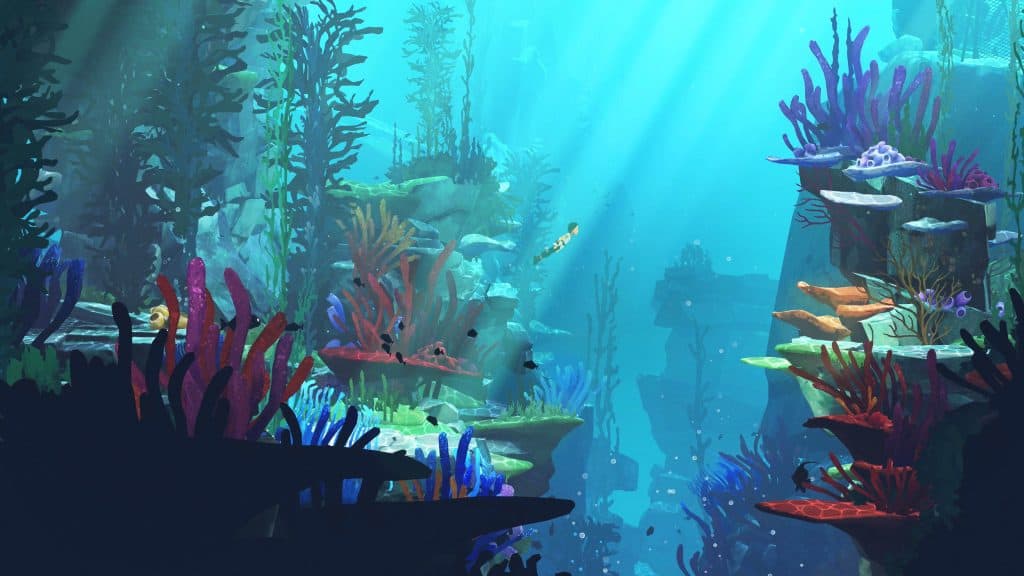
Mui’s abilities have expanded even more dramatically. You can now direct your companion with much greater precision — pointing anywhere on screen rather than using the original’s rigid vertical indicator — and Mui has gained remarkable new powers. In the game’s stunning underwater chapters (a first for the series), Mui encases itself in a protective bubble, allowing Lana to swim and dive while managing a limited oxygen supply. Elsewhere, Mui can hypnotize and assume control of various creatures: a small ink-producing fish that becomes essential to one of the game’s most deviously clever puzzles, or a flying insect used to reach otherwise inaccessible areas. There are also new hybrid robots that Lana can hack and control, adding mechanical puzzle layers alongside the organic ones. The variety is impressive, and the game introduces these mechanics at a pace that keeps each chapter feeling fresh.
The puzzles themselves represent the sequel’s most significant leap forward. The first Planet of Lana caught some fair criticism for puzzles that, while enjoyable, rarely pushed the player. Children of the Leaf takes a conscious step toward genuine challenge. The creative directors have spoken openly about this being an intentional decision — wanting to deliver the kind of demanding, rewarding puzzle design that time constraints prevented in the original. The results speak for themselves. There are moments in this game that had me staring at the screen for ten, fifteen, twenty minutes, turning the logic over in my head before that beautiful click of understanding arrived. A standout early encounter involves trapping a hostile electrified fish creature using ink clouds from a hypnotized smaller fish — it’s the kind of multi-step, observation-based puzzle that rewards patience and experimentation rather than brute force. These challenges are woven naturally into the world, growing organically from the environment rather than feeling artificially placed. And crucially, the game’s generous autosave system means that failure never feels punishing — you’re always encouraged to experiment.
The stealth sequences have also been refined. Sneaking past human enemies — members of a new tribe wielding stolen technology — adds a layer of tension that feels distinct from evading the machines. The AI is more observant, the environments more complex, and the margin for error tighter. Combined with the improved movement, these sections deliver genuinely nail-biting moments that balance beautifully against the quieter stretches of exploration and puzzle-solving.
A Living Painting: Art Direction and Sound
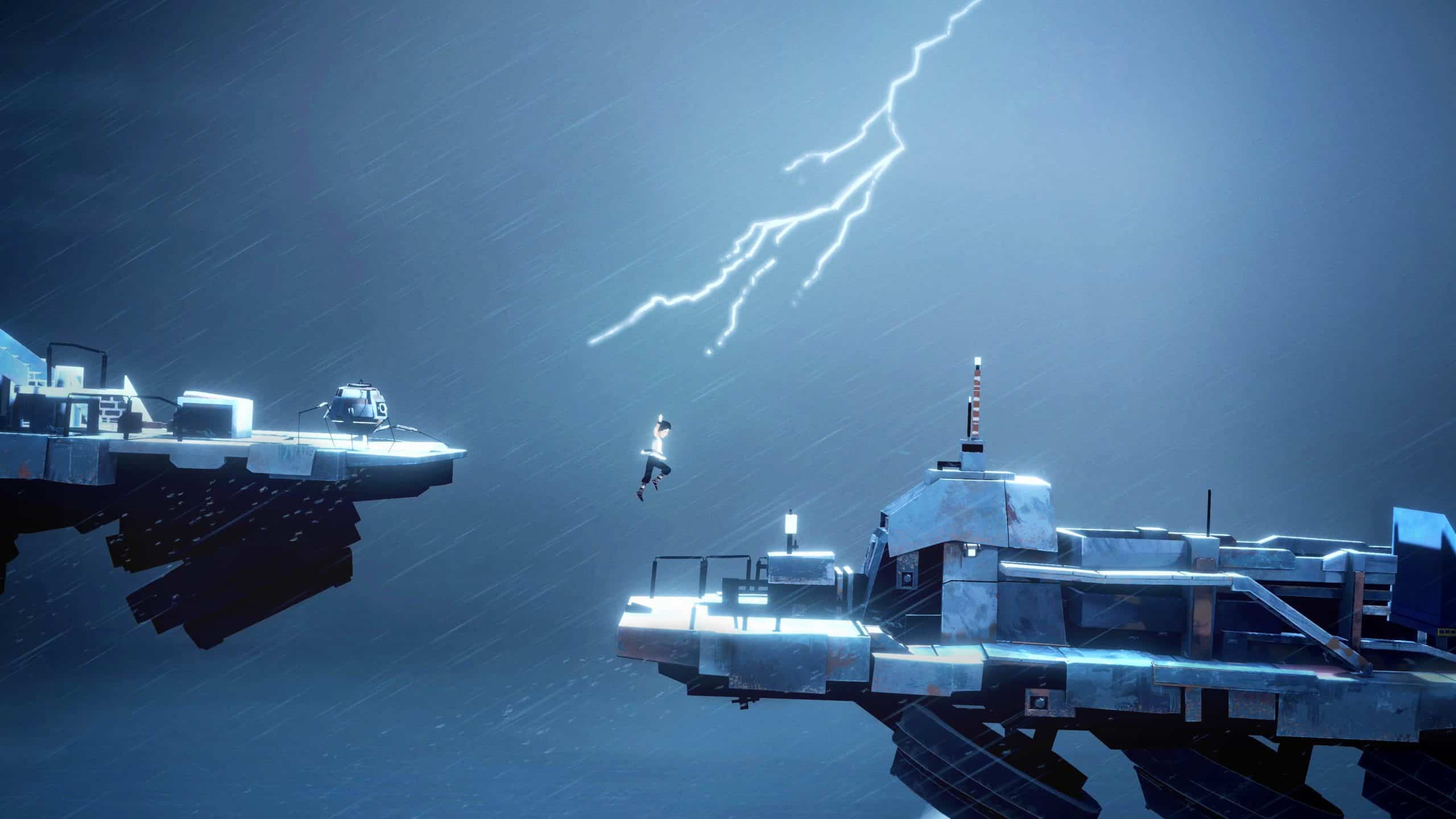
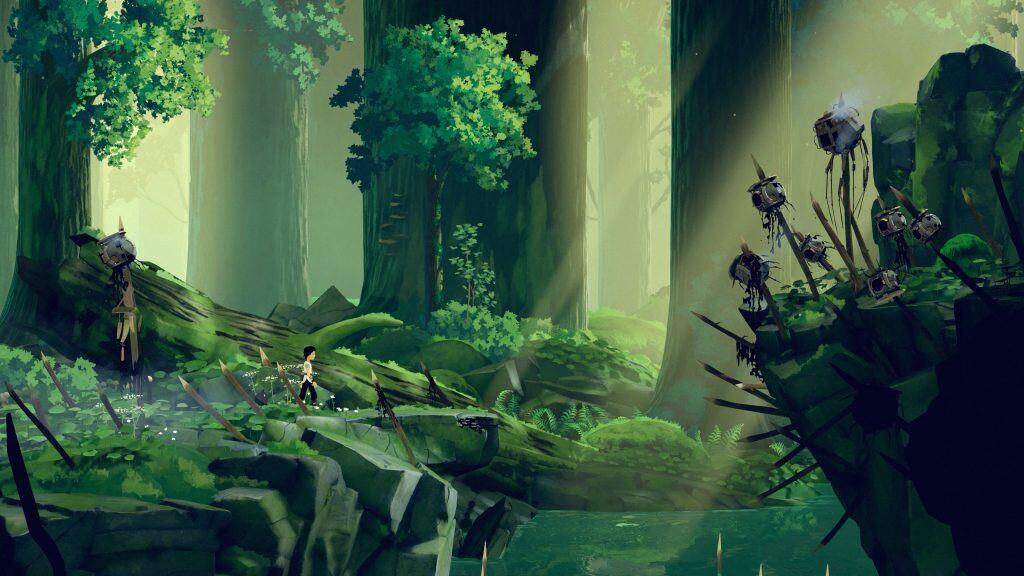
If there is one area where Planet of Lana II achieves something close to perfection, it’s in its presentation. This game is staggeringly beautiful. Every frame looks like it could be hung on a wall — and I mean that without a trace of hyperbole.
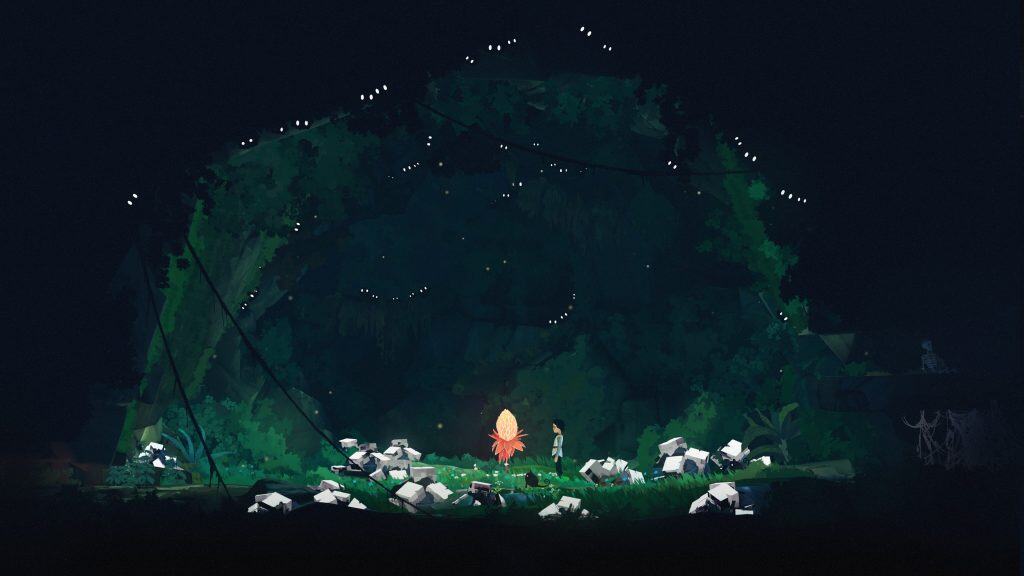
Wishfully’s hand-painted art style, already celebrated in the original, has been elevated by an expanded team of artists and a new lighting system that allows for more complex, atmospheric environments. The diversity of biomes on display is remarkable: you’ll traverse frozen mountain ranges where the wind visibly tears at Lana’s clothing, plunge into bioluminescent ocean trenches teeming with alien marine life, explore ancient forests where colossal tree roots intertwine with crumbling technology, and navigate dystopian urban ruins where the consequences of unchecked progress are laid bare. Each area has its own color palette, its own mood, its own sense of place. The world feels coherent and alive in a way that recalls the environmental storytelling of Studio Ghibli at its finest — comparisons to Princess Mononoke and Nausicaä of the Valley of the Wind are earned, not aspirational.
The animations deserve special mention. Lana and Mui’s physical interactions — the way she reaches down to pet Mui during quiet moments, the way Mui scurries ahead and then waits, tail flicking — communicate a relationship more eloquently than dialogue ever could. The game trusts these small, wordless gestures to carry enormous emotional weight, and they do. There’s a particular late-game moment involving a simple physical action between the two characters that hit me harder than most scripted dramatic scenes I’ve experienced in any medium this year.
And then there’s the music. Takeshi Furukawa — the BAFTA-nominated composer behind The Last Guardian and the original Planet of Lana — returns with a score that might be his finest work. Recorded with a full orchestra, Furukawa’s compositions for Children of the Leaf are darker, richer, and more varied than the original. The score moves between sweeping orchestral grandeur and intimate, almost fragile piano passages with remarkable grace. It knows when to fill the screen with sound and when to pull back into near-silence, letting the ambient world breathe. The main themes from the first game resurface in transformed arrangements that carry the weight of everything that’s happened since, and the new motifs — particularly a haunting, recurring melody tied to Novo’s ancient past — are instantly memorable. The music doesn’t just accompany the experience; it elevates every single moment of it. I’ve been listening to the soundtrack on repeat since finishing the game, and I suspect I’ll continue for months.
Where It Doesn’t Quite Soar
For all its brilliance, Children of the Leaf isn’t entirely without friction, and honesty demands I address it.
The game’s commitment to wordless storytelling, while largely a triumph, occasionally works against clarity. There were moments — particularly in the mid-game — where I wasn’t entirely sure what had just happened narratively, or why a particular event mattered. The game trusts the player to piece things together, and most of the time that trust is well-placed, but there are stretches where the ambiguity tips from intriguing into slightly opaque. Players who were already frustrated by the first game’s interpretive approach may find this one even more demanding in that regard.
Similarly, the hands-off approach to puzzle guidance — while rewarding for those who enjoy it — can occasionally lead to extended periods of confusion. The game rarely tells you what to do, and while most puzzles yield to careful observation and experimentation, a few had me stuck long enough that the meditative flow broke. This is, to some degree, a feature rather than a bug — the creative directors have been clear that they want the puzzles to genuinely challenge — but it’s worth noting for players who prefer a gentler difficulty curve.
Finally, at six to eight hours, Children of the Leaf is considerably longer than its predecessor (nearly twice the length), which is welcome. But even at that expanded runtime, I reached the credits wanting more. That’s a testament to how compelling the world is, but it also means the ending arrives with the faint sting of premature farewell — a sensation familiar to anyone who loved the original.
The Verdict: A Sequel That Transcends
Planet of Lana II: Children of the Leaf is that rare thing: a sequel that understands exactly what made the original special and then has the courage and talent to push further. Wishfully Studios has taken every element that defined Planet of Lana — the breathtaking art, the wordless emotional storytelling, the companion-driven puzzle design, the magnificent score — and refined, deepened, and expanded each one. The result is a game that feels both intimately familiar and thrillingly new.
It’s a game about connection: between a girl and her companion, between a civilization and the natural world it inhabits, between a player and a story told without words. It’s about the things we’re willing to protect and the cost of progress when it outpaces wisdom. And it communicates all of this through some of the most gorgeous visuals, most moving music, and most thoughtfully designed puzzles I’ve encountered in the genre.
Children of the Leaf joins the ranks of Inside, Ori and the Blind Forest, and the best of Studio Ghibli’s filmography as works that prove how much emotion and meaning can be conveyed through craft, beauty, and restraint. If you played the first Planet of Lana and wished for more, this is everything you wanted and then some. If you’re coming in fresh, the game welcomes you warmly — but I’d recommend experiencing the original first, if only because the emotional continuity makes the sequel’s payoffs even richer.
I walked into Novo expecting a lovely sequel. I walked out deeply moved, creatively inspired, and already counting the days until I can revisit it. That’s the mark of something truly special.
Planet of Lana II: Children of the Leaf is a stunning, emotionally rich cinematic adventure that elevates everything the original did right, held back only by occasional narrative opacity and moments where its hands-off design philosophy tests patience alongside skill.