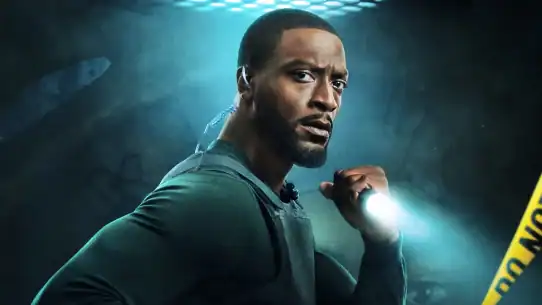



A High-Altitude Political Thriller That Knows Exactly What It Is—and Gets Better Because of It
I loved the first season of Red Eye. Not in a casual, “this was fun” way, but in the rarer sense that comes from discovering a political action thriller that understands momentum, moral ambiguity, and the pleasure of well-constructed escalation. Season 2 doesn’t just meet that standard—it leans into it, sharpens it, and, crucially, refuses to slow down in search of prestige for prestige’s sake. This is television that knows the value of velocity, and it embraces it unapologetically.
In a landscape increasingly dominated by bloated seasons, overextended mythologies, and “cinematic” series that forget the basic grammar of episodic tension, Red Eye Season 2 feels almost radical in its clarity of purpose. It wants to entertain. It wants to thrill. And it wants to do so while still engaging seriously with power, accountability, and the murky overlap between political necessity and ethical compromise. That combination—smart, propulsive, and confident—is precisely why this show matters right now.

A Season That Builds, Not Repeats
Season 2 arrives with the advantage—and the burden—of expectation. The first season established a compact, high-stakes framework, using its central premise not as a gimmick but as a pressure cooker. What could have easily remained a one-season concept instead becomes, in Season 2, a broader meditation on systems: how governments protect themselves, how individuals are instrumentalized, and how truth is often collateral damage.
What impressed me most is how deliberately Season 2 avoids the trap of simple escalation. Rather than merely going “bigger,” it goes wider. The narrative architecture is more ambitious, the political implications more layered, and the character dynamics more morally unstable. The series trusts that viewers don’t need their hands held – and that trust pays off.
Critically, the season understands that pace doesn’t mean chaos. Each episode is tightly engineered, with twists that feel earned rather than gratuitous. Revelations don’t exist to shock for shock’s sake; they recontextualize what came before, forcing the audience to reassess loyalties and motivations in real time. That sense of constant recalibration is where Red Eye thrives.

Political Thriller, Not Political Decoration
One of the strongest elements consistently praised by top-tier critics – and rightly so – is how Red Eye treats politics not as aesthetic texture, but as narrative engine. Season 2 doubles down on this. The show isn’t interested in partisan messaging or easy allegory. Instead, it focuses on institutional behavior: the quiet decisions made behind closed doors, the trade-offs justified as “necessary,” and the personal cost of being adjacent to power without truly wielding it.
There’s a refreshing maturity in how Season 2 frames its conflicts. No one is purely innocent, and no one is cartoonishly villainous. Even the most alarming actions are often presented as the logical outcome of systems designed to prioritize stability over truth. This is where the show aligns itself with the best of modern political thrillers – stories less concerned with heroes and villains than with incentives and consequences.
That seriousness never becomes dour. If anything, the show’s intelligence heightens its entertainment value. You feel the gears turning. You feel the stakes tightening. And because the series never pauses to explain its own cleverness, the tension remains intact.

Performances That Carry the Altitude
Season 2 also benefits from performances that understand the tonal balance required here. This is not a show that asks its actors to underline every emotional beat. Restraint is the currency. Anxiety is often internalized, conveyed through hesitation, silence, or a glance held half a second too long.
What I appreciated most is how the acting supports the show’s thematic concerns. Characters aren’t delivering monologues about morality; they’re making choices under pressure, often with incomplete information. The result is a cast that feels embedded in the world rather than performing at the audience. It’s credibility through behavior, not exposition.
Several performances deepen noticeably in Season 2, reflecting the show’s expanded scope. Relationships are tested, alliances become provisional, and trust is portrayed as something transactional rather than emotional. That evolution feels organic, not imposed.
The Art of the Twist (And Why It Works)
Yes, Red Eye can be far-fetched at times. I won’t pretend otherwise. The series occasionally asks viewers to accept coincidences, compress timelines, or buy into logistical leaps that wouldn’t survive forensic scrutiny. But here’s the thing: it knows this. And more importantly, it earns that indulgence through craft.
The twists in Season 2 work because they’re embedded in character logic and institutional behavior. They don’t arrive out of nowhere; they emerge from choices already made. That distinction matters. In lesser thrillers, twists feel like manipulation. In Red Eye, they feel like consequence.
Each episode ends with just enough destabilization to pull you forward without collapsing what came before. It’s the rare show where bingeing feels both irresistible and justified—not because it’s shallow, but because it’s meticulously paced.

Context: Why This Kind of Show Is Necessary Again
Watching Season 2, I kept thinking about how rare this type of series has become. Political action thrillers that are smart, fast, and unapologetically entertaining used to be a television staple. Somewhere along the way, the genre either became self-serious to the point of inertia or diluted into spectacle without substance.
Red Eye occupies a crucial middle ground. It respects its audience’s intelligence without demanding academic engagement. It moves quickly without becoming disposable. And it understands that entertainment and insight are not opposing values.
In that sense, Season 2 feels like a corrective – a reminder that genre television can be sharp, relevant, and thrilling without inflating itself into prestige theater. It doesn’t chase awards attention; it chases narrative efficiency. Ironically, that discipline is what gives it weight.
Season 2 vs. Season 1: Confidence Is the Difference
If Season 1 was about proving the concept, Season 2 is about owning it. The storytelling is more assured, the tonal control tighter, and the thematic ambition clearer. There’s less hesitation, fewer safety nets. The show trusts its own identity now.
That confidence allows Season 2 to take risks – not just in plot, but in pacing and perspective. It lingers where Season 1 rushed. It accelerates where another show might overexplain. The result is a season that feels both leaner and richer, a difficult balance that few series manage after an initial success.
The Case for a Season 3 (And Why It Should Happen)
By the time Season 2 reaches its conclusion, one thing is clear: this story is not done. Not because of unresolved plot mechanics, but because the thematic terrain Red Eye has mapped is far from exhausted. The show has proven it can expand without losing focus, escalate without collapsing into excess, and entertain without abandoning intelligence.
I’m not demanding a Season 3 out of frustration. I’m demanding it out of confidence. Confidence that this creative team understands the genre. Confidence that there are still stories worth telling within this framework. And confidence that audiences are hungry – desperately so – for political thrillers that don’t insult their intelligence or waste their time.
And so…
Season 2 of Red Eye is sharper, bolder, and more assured than its debut. It embraces the pleasures of the political action thriller while quietly elevating the form, delivering a season that is as gripping as it is thoughtful. Yes, it stretches plausibility. Yes, it moves fast. But it does so with intention, discipline, and an unmistakable sense of purpose.
This is television that understands momentum as an art form. And in doing so, it reminds us why we fell in love with this genre in the first place.
🇵🇹

Quando a velocidade é uma escolha estética — e política

Adorei a primeira temporada de Red Eye. Não de forma casual ou passageira, mas com aquela convicção rara que surge quando encontramos um thriller político que compreende verdadeiramente ritmo, ambiguidade moral e o prazer de uma escalada narrativa bem construída. A segunda temporada não se limita a corresponder a essa fasquia — afina-a, expande-a e, sobretudo, recusa abrandar em nome de um falso prestígio. Esta é uma série que entende o valor da velocidade e a assume sem qualquer pudor.

Num panorama televisivo cada vez mais dominado por temporadas inflacionadas, mitologias excessivamente prolongadas e séries “cinematográficas” que se esquecem da gramática básica da tensão episódica, Red Eye — Temporada 2 surge quase como um gesto radical na sua clareza de propósito. Quer entreter. Quer provocar tensão. E quer fazê-lo levando a sério questões de poder, responsabilidade e a zona cinzenta onde a necessidade política colide com a ética individual. Essa combinação — inteligente, veloz e confiante — é precisamente aquilo que torna esta série relevante hoje.

Uma temporada que constrói, não repete

A segunda temporada chega com a vantagem — e o peso — da expectativa. A primeira estabeleceu um dispositivo narrativo compacto e de alto risco, usando a sua premissa central não como truque, mas como câmara de pressão. Aquilo que facilmente poderia ter ficado fechado numa única temporada transforma-se agora numa reflexão mais ampla sobre sistemas: como os governos se protegem, como os indivíduos são instrumentalizados e como a verdade se torna, tantas vezes, dano colateral.

O que mais me impressionou foi a forma consciente como a Temporada 2 evita a armadilha da simples escalada. Em vez de ir apenas “mais longe”, vai mais fundo. A arquitectura narrativa é mais ambiciosa, as implicações políticas mais densas e as dinâmicas entre personagens mais instáveis do ponto de vista moral. A série confia na inteligência do espectador — e essa confiança compensa.

Mais importante ainda: ritmo não é sinónimo de caos. Cada episódio é cuidadosamente desenhado, com reviravoltas que parecem consequência natural das decisões tomadas, nunca artifícios gratuitos. As revelações não existem apenas para chocar; servem para recontextualizar o que já vimos, obrigando-nos a reavaliar motivações e alianças em tempo real. É nesse constante reajuste que Red Eye encontra a sua verdadeira força.

Thriller político, não decoração política

Um dos aspectos mais elogiados pela crítica especializada — e com razão — é a forma como Red Eye trata a política não como pano de fundo estético, mas como motor narrativo. A segunda temporada aprofunda esse compromisso. A série não está interessada em mensagens partidárias nem em alegorias fáceis. O foco está no comportamento institucional: decisões tomadas longe da luz pública, compromissos justificados como “necessários” e o custo humano de orbitarmos o poder sem nunca o controlarmos verdadeiramente.

Existe uma maturidade notável na forma como os conflitos são apresentados. Não há inocentes absolutos nem vilões caricaturais. Mesmo as acções mais perturbadoras surgem frequentemente como resultado lógico de sistemas desenhados para privilegiar a estabilidade em detrimento da verdade. É aqui que Red Eye se aproxima do melhor que o thriller político contemporâneo tem para oferecer: histórias menos preocupadas com heróis e antagonistas do que com incentivos, mecanismos e consequências.

E, ainda assim, a série nunca se torna pesada. Pelo contrário, a sua inteligência reforça o entretenimento. Sentimos as engrenagens a mover-se, a tensão a acumular-se, e porque a narrativa nunca se detém para sublinhar a própria esperteza, o suspense mantém-se intacto.

Interpretações que sustentam a altitude

A Temporada 2 beneficia também de interpretações que compreendem perfeitamente o equilíbrio tonal exigido por este universo. Não é uma série de sublinhados emocionais ou de grandes discursos explicativos. Aqui, a contenção é fundamental. A ansiedade surge nos silêncios, nas hesitações, num olhar prolongado meio segundo além do confortável.

O que mais apreciei foi a forma como o trabalho dos actores reforça as ideias centrais da série. As personagens não falam sobre moralidade; fazem escolhas sob pressão, quase sempre com informação incompleta. O resultado é um elenco que parece viver dentro do mundo da série, e não actuar para o espectador. A credibilidade nasce do comportamento, não da exposição.

Algumas performances ganham particular densidade nesta segunda temporada, acompanhando o alargamento do horizonte narrativo. Relações são testadas, alianças tornam-se circunstanciais e a confiança surge como um bem transaccionável, não emocional. Essa evolução é orgânica, nunca imposta.

A arte da reviravolta — e porque funciona

Sim, Red Eye pode ser, por vezes, pouco verosímil. Não vale a pena fingir o contrário. A série pede-nos que aceitemos coincidências, compressões temporais ou saltos logísticos que não resistiriam a uma análise excessivamente literal. Mas há algo essencial aqui: a série sabe-o. E, mais importante ainda, conquista essa licença através do rigor formal.

As reviravoltas funcionam porque estão enraizadas na lógica das personagens e no funcionamento das instituições. Não surgem do nada; emergem de decisões previamente tomadas. Essa diferença é crucial. Em thrillers mais fracos, as reviravoltas soam a manipulação. Em Red Eye, soam a consequência.

Cada episódio termina com o grau exacto de desestabilização necessário para nos puxar para o seguinte, sem desmoronar o que foi construído antes. É uma série pensada para ser vista de seguida, sim, mas nunca à custa da coerência.

Contexto: porque precisamos novamente deste tipo de série

Ao longo da temporada, dei por mim a pensar como este tipo de série se tornou raro. Thrillers políticos rápidos, inteligentes e assumidamente entretenimento eram, outrora, um pilar da televisão. Algures pelo caminho, o género tornou-se ou excessivamente solene ou diluído em espectáculo sem substância.

Red Eye ocupa um espaço intermédio essencial. Respeita a inteligência do público sem exigir esforço académico. Move-se com rapidez sem se tornar descartável. E demonstra que entretenimento e reflexão não são valores incompatíveis.

Nesse sentido, esta segunda temporada funciona quase como um ajuste de contas com o presente televisivo: um lembrete de que o género pode ser relevante, incisivo e emocionante sem se disfarçar de “prestígio”.

Temporada 2 vs. Temporada 1: a diferença chama-se confiança

Se a primeira temporada serviu para provar o conceito, a segunda serve para o assumir plenamente. A narrativa é mais segura, o controlo tonal mais firme e a ambição temática mais clara. Há menos hesitação, menos redes de segurança. A série conhece agora a sua identidade.

Essa confiança permite-lhe arriscar — não apenas na história, mas no ritmo e no ponto de vista. Detém-se onde antes corria. Acelera onde outras séries explicariam em demasia. O resultado é uma temporada simultaneamente mais enxuta e mais rica — um equilíbrio difícil de alcançar após um primeiro sucesso.

O argumento para uma terceira temporada

Quando a segunda temporada chega ao fim, uma coisa torna-se evidente: esta história ainda não terminou. Não por deixas narrativas artificiais, mas porque o território temático que Red Eye mapeou está longe de se esgotar. A série provou que sabe crescer sem perder foco, intensificar sem cair no excesso e entreter sem abdicar da inteligência.

Não peço uma terceira temporada por frustração. Peço-a por confiança. Confiança numa equipa criativa que compreende o género. Confiança de que ainda há histórias relevantes para contar neste universo. E confiança de que o público continua a desejar — talvez mais do que nunca — thrillers políticos que não desperdicem tempo nem subestimem quem os vê.

Veredicto final

A segunda temporada de Red Eye é mais afiada, mais ousada e mais segura do que a sua estreia. Abraça plenamente os prazeres do thriller político enquanto eleva discretamente o género, entregando uma temporada tão envolvente quanto pensada. Sim, estica a plausibilidade. Sim, avança a alta velocidade. Mas fá-lo com intenção, rigor e um sentido claro de direcção.

Esta é televisão que entende o ritmo como forma de expressão. E, ao fazê-lo, lembra-nos porque nos apaixonámos por este género em primeiro lugar.