


I’ll be honest: I don’t scare easily anymore. Years of playing survival horror games have trained my brain to anticipate the jump scare, to read the audio cues, to stay detached just enough to keep the cortisol in check. So when Unsealed: The Mare — a first-person psychological horror title developed solo by Simon Andersson at Swedish studio Gamhalla — managed to genuinely unsettle me not once, but repeatedly, across an experience that runs four to six hours depending on difficulty, I sat up and paid attention. This is a small game, made by one person, published on PS5 and Xbox Series X|S via Perp Games. It wears its inspirations visibly on its sleeve — P.T., Amnesia, the entire lineage of corridor-based psychological dread — and yet it brings something unmistakably its own to the table: a nightmare shaped by sleep paralysis, by grief, and by the terrifying intimacy of memory. That specificity is what makes Unsealed: The Mare worth your time, even as a rough-around-the-edges console port occasionally reminds you that a solo developer can only do so much.
A haunting, deeply personal debut that earns its scares — but needs a bit more polish to truly seal the deal.
Vera’s Nightmare: A Story Rooted in the Personal
You play as Vera, a woman who wakes — if “wakes” is even the right word — inside a fractured dreamscape tied to her family’s tragic past. The house is familiar, unsettlingly so, but wrong in the specific way that anyone who has experienced sleep paralysis will recognize immediately: every room looks like somewhere you know, but the geometry is off, the air is thick, and you know, with a certainty that bypasses logic, that something is watching you. That sensation is not accidental. Andersson has spoken openly about how his own experiences with sleep paralysis directly shaped the tone and texture of this game, and you feel that authenticity in every corner. This is not borrowed horror mythology. It is someone’s actual fear, rendered interactive.
The narrative unfolds across three chapters, each peeling back another layer of Vera’s family tragedy. Rather than being guided through exposition, you reconstruct events actively — through 89 handwritten notes, environmental clues, residual memories embedded in cursed objects, and the slow, terrible revelation of what The Mare actually is and why it haunts this particular dreamscape. The story draws on themes of guilt, grief, and generational trauma, and at its best — when the environmental storytelling and the gameplay loop align — it lands with genuine emotional weight. I found myself genuinely troubled by what I uncovered, not just frightened by what was chasing me. That duality is rare in the genre.
Where the narrative framing stumbles is in execution at the level of polish. Many of those 89 notes, which carry approximately 80 percent of the lore, remain in English regardless of your language settings — a significant oversight for a game that relies so heavily on those fragments for emotional and narrative clarity. For English-speaking players this is a non-issue, but it reveals a gap between the ambition of the storytelling and the thoroughness of the localization work. The story Andersson is trying to tell deserves better delivery.
Focus Memory and the Art of Resourceful Terror
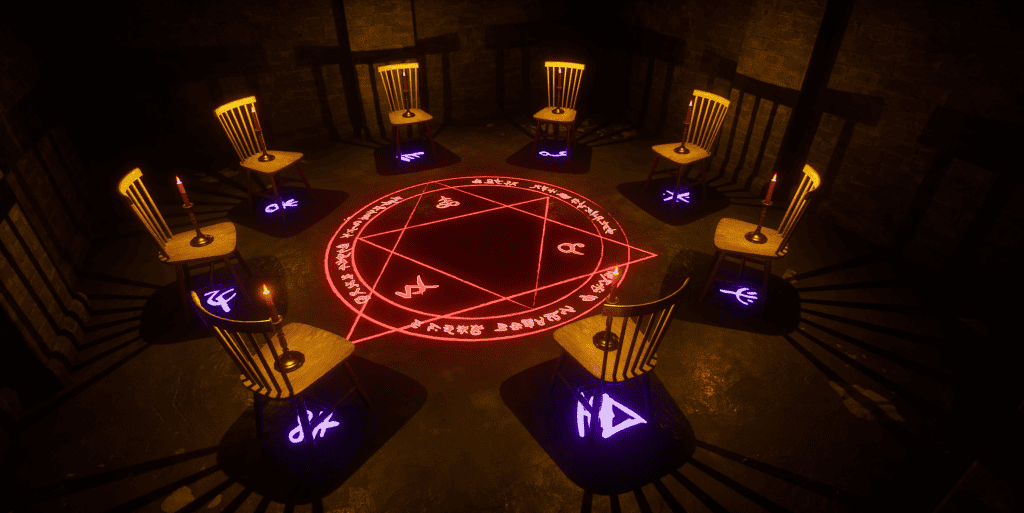
Mechanically, Unsealed: The Mare is built around a smart central conceit: Focus Memory, mapped to R1 on the DualSense, allows Vera to “tune in” to the residual emotional charge of objects and spaces, visually altering the environment to reveal hidden messages, previously invisible passages, and environmental clues that bridge the gap between the nightmare and the past. It is a puzzle mechanic that doubles as a lore delivery system, and it works exceptionally well. Activating Focus feels tense rather than convenient — you are not pausing the danger, you are leaning deeper into the nightmare with your eyes half-open.
Resource management provides the game’s second layer of mechanical tension. Vera carries a flashlight, a lighter, replacement bulbs, and a camera, all of which run on finite supplies that grow increasingly scarce as the chapters progress. Being left without light in Unsealed: The Mare is not merely an inconvenience — it is a death sentence, both practically and atmospherically. The game understands that darkness is not just a visual state but a psychological one, and it leverages the PS5’s DualSense controller in subtle but effective ways, with the haptic feedback shifting in response to The Mare’s proximity in a manner that gets under your skin.
The two available difficulty modes — Stalked (a more measured experience, running roughly four to five hours) and Pursued (a relentless, resource-depleted ordeal clocking in closer to five to six hours) — give the game genuine replayability, particularly for those chasing all 18 trophies or looking to uncover every fragment of lore on a second run. Each of the three chapters introduces new mechanics and escalates the challenge, building toward a finale that expects you to synthesize everything you have learned. That design philosophy, borrowed from the Soulslike tradition of making death a teacher, fits the horror context naturally: every failure is a sealed memory, another fragment of Vera’s nightmare internalizing your mistakes.
The gameplay loop is lean and purposeful, but it does require patience. Unsealed: The Mare is deliberately paced, and at times that deliberateness tips into opaqueness. Progression is intentionally non-linear and lacks traditional hand-holding, which the developer flags upfront and which I respect philosophically — but there are moments where the absence of any directional cue tips from creepy ambiguity into genuine confusion. The game is not trying to hold your hand, but it occasionally lets go a little too abruptly.
An Atmosphere Worth the Price of Admission
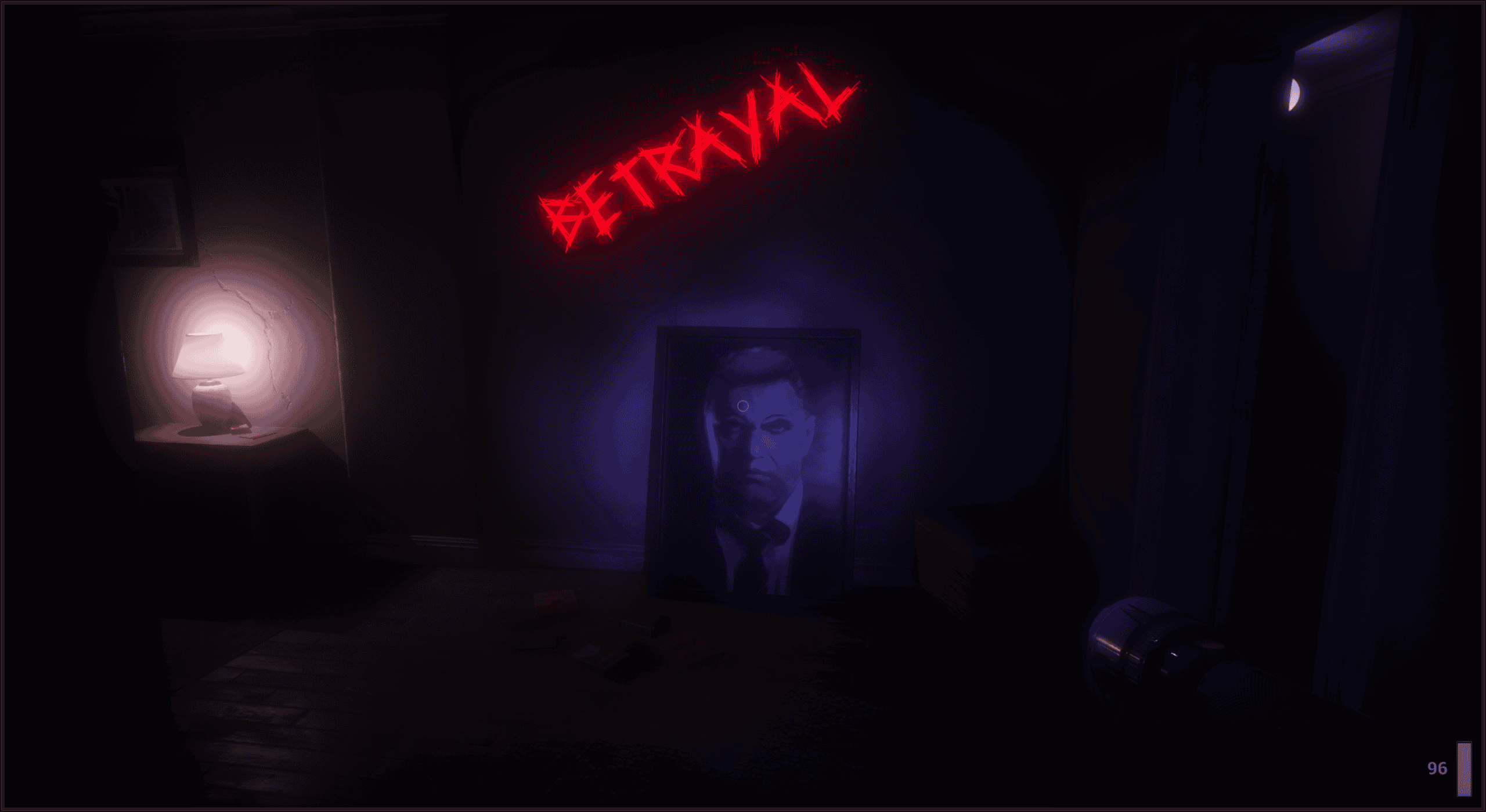
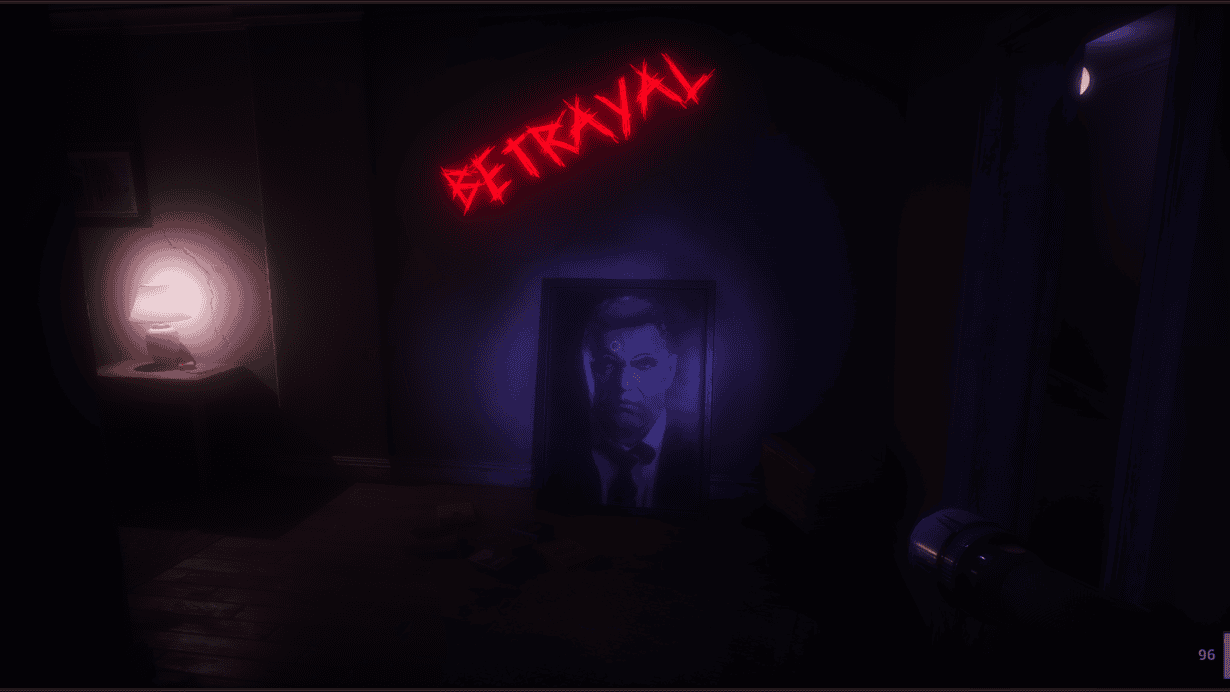
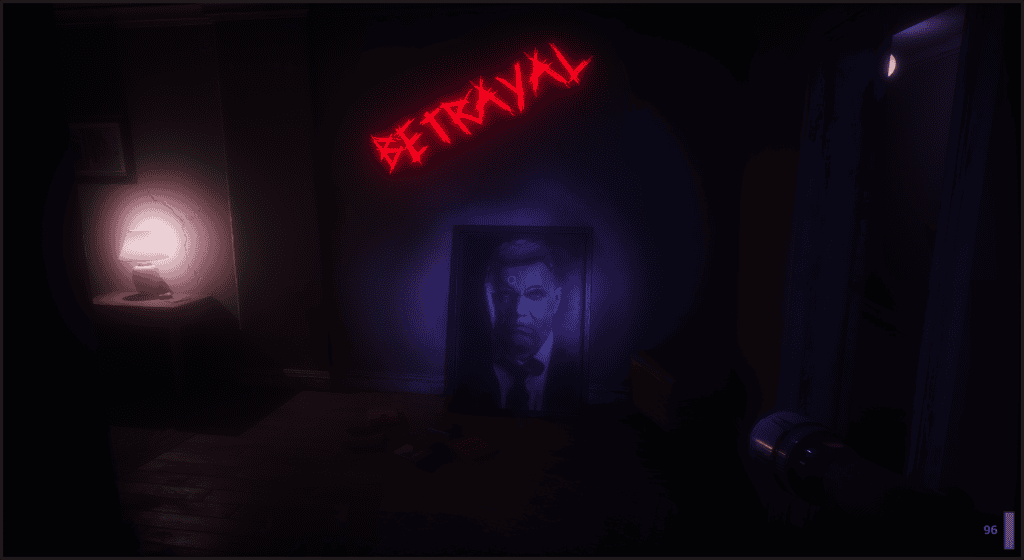
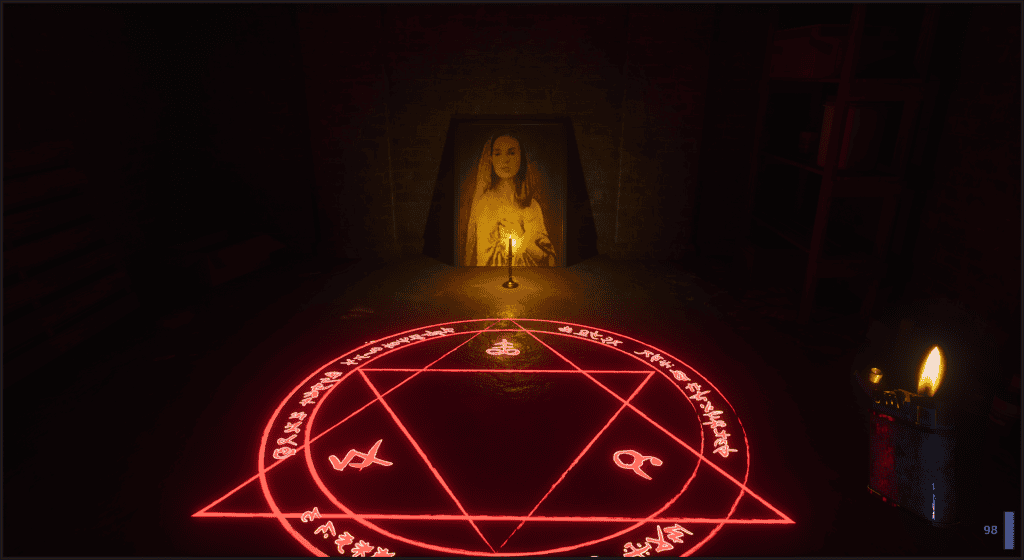
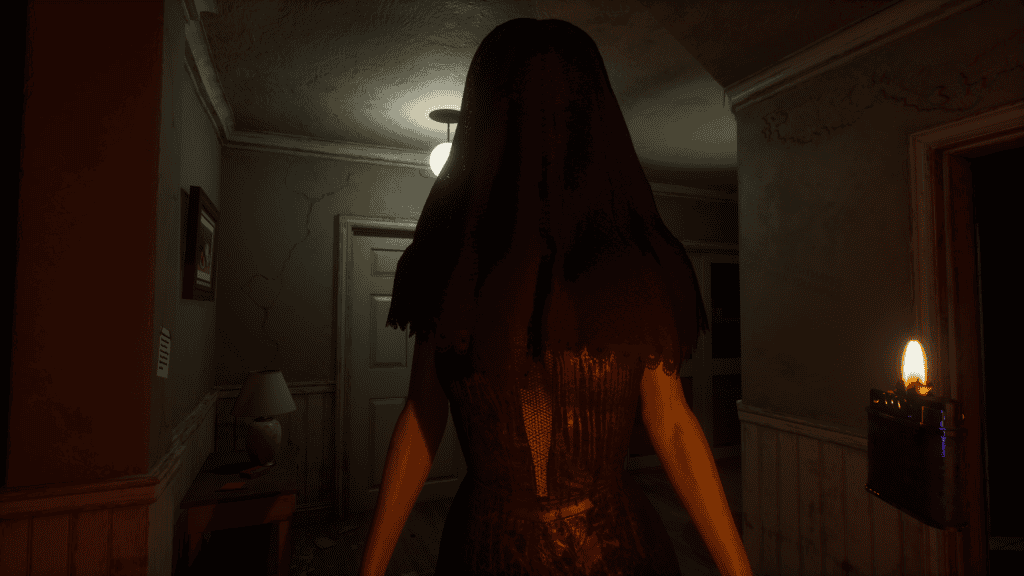
Visually, Unsealed: The Mare punches well above its weight class for an indie title at this price point. The environments — domestic spaces corrupted by nightmare logic, hallways that should be familiar but aren’t, rooms that transition between mundane and deeply, wrongly transformed — are rendered with a strong command of lighting and shadow that does much of the horror heavy lifting. The flickering of fluorescent lights as The Mare draws close, the distortion of the visual field when Focus Memory is active, the way a perfectly ordinary bedroom can become a labyrinth of shadows and handwritten notes in seconds: all of it coheres into a genuinely oppressive atmosphere.
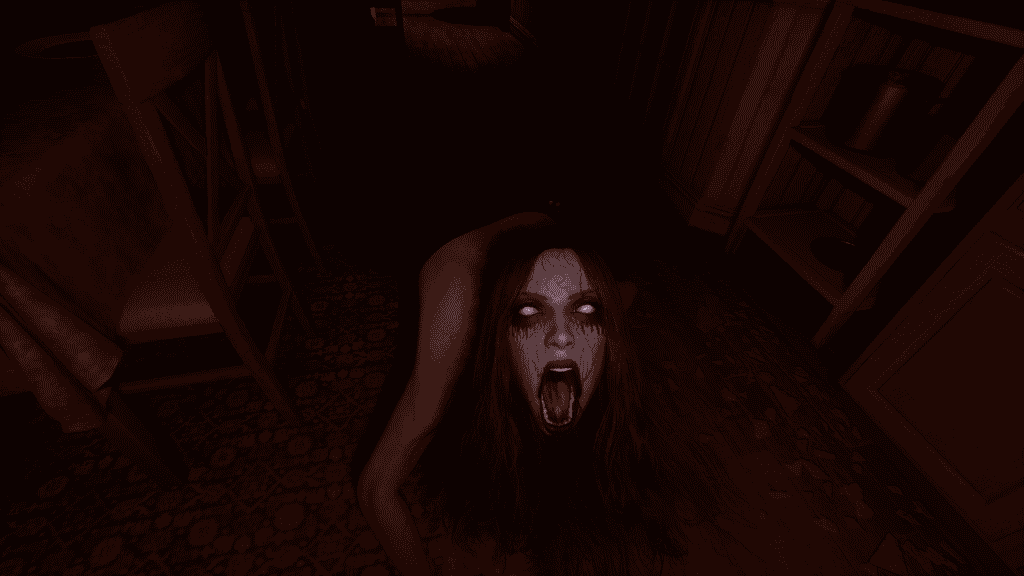
The creature design is a standout. The Mare — whose visual design is rooted in sleep paralysis hallucination iconography, with a fixed smile and sunken, unblinking eyes — achieves what many horror games chase but few actually land: a creature that is conceptually disturbing before it even moves. Its appearances are not telegraphed by visible health bars or structured encounter systems. It materializes. It looms. It is sometimes more frightening glimpsed at the edge of a corridor than it is in full confrontation, and the game is smart enough to know that. The Mare also adapts to your behavior — learning your patterns and adjusting its aggression accordingly — which gives even returning players reason to remain genuinely on edge.
The environmental symbolism is thoughtful, too. Stuffed animals, mirrors, photographs, and sealed doors are not just set dressing; they are the visual grammar of Vera’s psyche, and once you begin reading that grammar, the environments take on additional layers of meaning that pay off when the story’s darker revelations arrive. For a game built by one person, the coherence of the artistic vision is remarkable.
What the visuals cannot fully disguise, however, is the roughness of the PS5 port itself. The options menu is a largely unmodified carry-over from the PC version, complete with VSYNC toggles, TSR quality settings, and graphical presets that are normally managed automatically on console hardware. It is a small thing in isolation, but it speaks to a broader lack of platform-specific optimization that reveals itself in other ways: the analog stick movement maps directly from WASD keyboard inputs, meaning there is no gradual acceleration — you are either stationary or moving at full speed, with no intermediate walk speed tied to how gently you push the stick. For a game built around slow, cautious exploration and the kind of careful attention to audio cues that determines survival, this movement scheme feels misaligned with the experience the game is trying to create. It is not game-breaking, but it is consistently noticeable.
Sound Design as a Survival Tool
This is where Unsealed: The Mare is simply exceptional. The audio design is not atmospheric wallpaper — it is a mechanical system, and possibly the most technically impressive aspect of the entire game. Andersson has explicitly said the game should be played with headphones, and he is correct: the spatial audio work is the kind that makes you stop moving because you need to listen.
The Mare announces its proximity through a layered vocabulary of sounds — whispers that seem to originate inside your own head, floor creaks that track its movement through walls, a shift in the underlying musical texture when you have been detected — and learning to read that vocabulary is as important to survival as knowing where the exits are. I found myself holding my breath during certain sequences, and that is not a metaphor. The sound design is convincing enough to produce involuntary physical responses. An encounter in a mirror — prefaced by nothing more than the phrase “look closer” written on a wall and a sound cue that escalates from subtle to shattering — is among the most genuinely frightening moments I have encountered in a horror game this year.
The musical score similarly avoids the horror-game trap of constant stingers and abrupt swells. Instead, it works in the spaces: ambient tension that builds so gradually you do not notice it until you realize your shoulders are at your ears. That compositional restraint is a sign of real craft, and it elevates a game that, on a technical budget, could easily have papered over its limitations with cheap audio excess.
A Promising but Imperfect Debut
Unsealed: The Mare is Gamhalla’s first console release, and it shows — but not in a way that undoes what the game accomplishes. The rough edges are real: the console port needs attention, particularly around movement controls and the options menu; the localization for non-English speakers is incomplete in a way that undermines a story that depends on those notes for its emotional core; and the puzzle design occasionally crosses from deliberately opaque to genuinely frustrating. These are not incidental issues. They are things a patch could address, and they are things that a larger team or a longer post-launch support window could fix.
But underneath those limitations is something that the horror genre desperately needs more of: games made by people telling stories they actually have something personal to say about. The sleep paralysis DNA is not a marketing hook — it is the organizing principle of every scare, every mechanic, every piece of visual design. The Mare feels like a real nightmare because it was built from one. The atmosphere is thick enough to cut. The sound design is genuinely advanced. And the Focus Memory mechanic is a clever piece of design that earns its place at the center of the experience rather than existing as a gimmick.
Unsealed: The Mare asks very little in exchange for delivering a horror experience that will stay with you longer than most. It is not a flawless game, and its PS5 version in particular would benefit from additional polish. But it is a game with a distinct identity, a clear creative vision, and the kind of atmosphere that the genre’s biggest-budget entries frequently struggle to manufacture. Horror fans willing to accept an imperfect but sincere experience will find something here worth unsealing.
Unsealed: The Mare is a hauntingly personal psychological horror experience, elevated by exceptional sound design and a smart core mechanic, but held back by a rough console port and localization gaps that a future patch should address. Recommended for horror genre enthusiasts with a headset and a tolerance for deliberate, demanding pacing.