
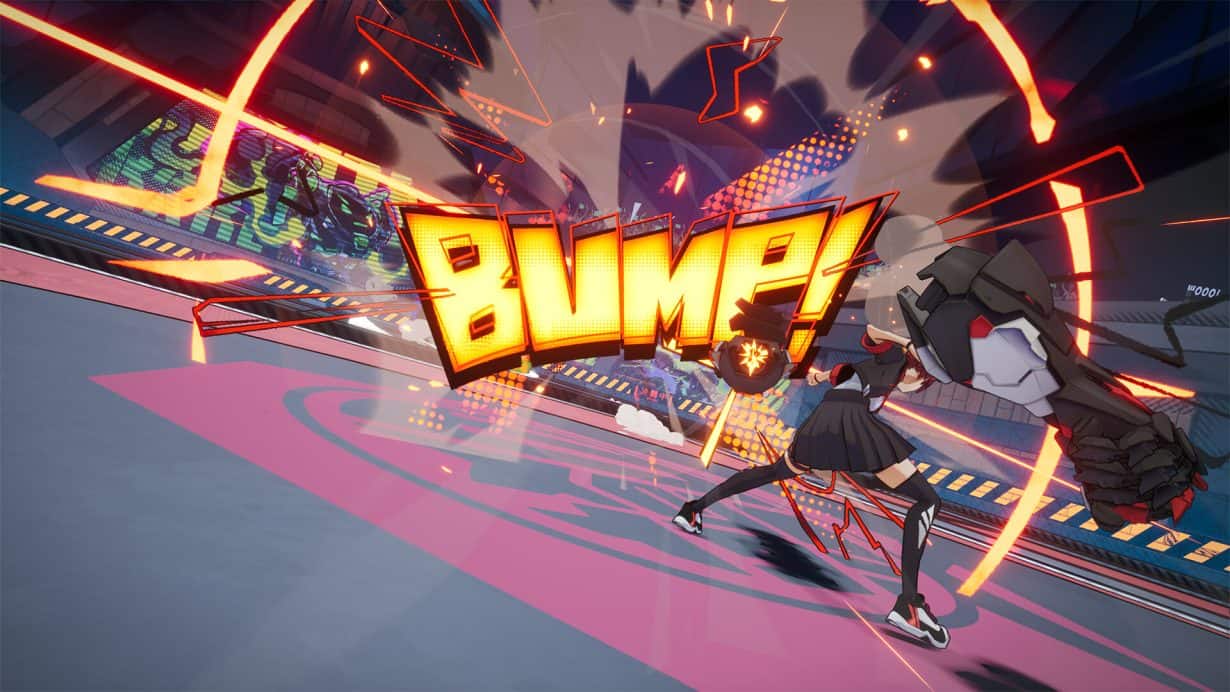

Shueisha Games’ BAKUDO is built around a strikingly focused premise: a boss-rush action game where every confrontation revolves around the ball. Developed with an emphasis on tightly crafted one-on-one encounters, the game combines the rhythm of competitive sports, the spectacle of cinematic boss battles, and a school setting shaped by rivalry, hierarchy, and personal ambition. Rather than treating its sports influence as a surface-level stylistic layer, BAKUDO uses offense, defense, timing, and reading the opponent as the foundation of its combat design.
That clarity of concept also extends to the game’s story. What begins as a character-driven struggle inside a campus environment gradually opens into a larger sci-fi conflict, with each battle serving both as a mechanical test and a dramatic turning point. In the interview below, BAKUDO Game Director Arthur Huang discusses how the project took shape, why the team centered the experience on boss encounters, and how BAKUDO aims to merge action intensity, competitive energy, and narrative resolve into a single, cohesive experience.
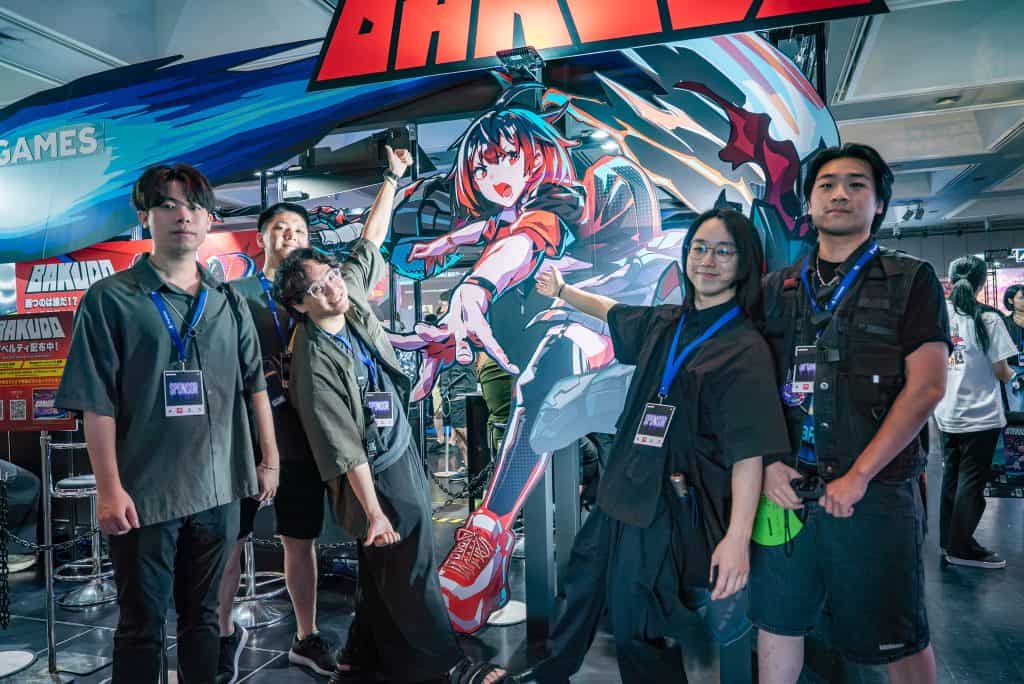
BAKUDO blends a boss-rush action structure with a futuristic ball-sport concept, set within a school environment. This is an unusual mix of genres and tones. How did this core idea originate, and what kind of experience were you aiming to create by combining competitive sports energy with cinematic boss battles?
A:
It actually started from team size. Because we had limited manpower, we wanted to concentrate our resources on the most essential experience, which is why we chose Boss Rush as the central pillar — focusing on polishing each boss encounter.
From there, we thought about what kind of theme would make “challenging stronger opponents one by one” feel natural, and we landed on ball sports. Ball sports inherently involve offense and defense, rhythm shifts, and reading your opponent — qualities that are actually very close to action combat. The school campus was an intuitive setting — almost everyone has played ball sports in gym class, so players can understand this world without feeling disoriented, and the story doesn’t need a lot of explanation.
We also specifically established a “strength-based hierarchy” system, which makes the protagonist’s journey of continuously challenging stronger opponents and climbing the ranks feel highly compatible with the Boss Rush structure. Ultimately, what we wanted to create was an experience that combines the passion of competitive sports with the pressure and spectacle of boss battles — making every fight feel like an intensely focused showdown.
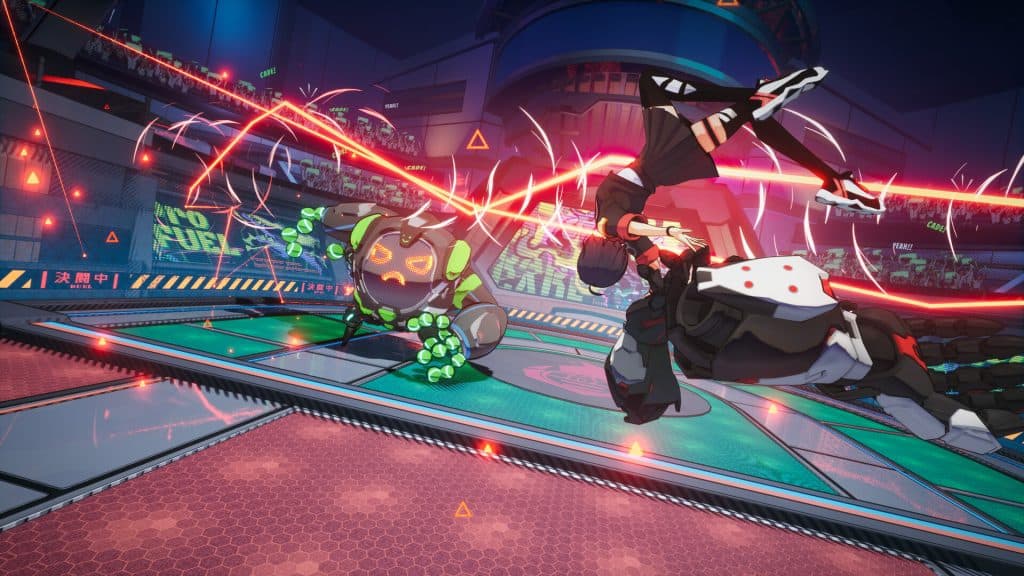
The ball is both the central mechanic and the main weapon in BAKUDO. When designing gameplay around a single object, how did you ensure it felt deep and expressive rather than repetitive? What were the key design challenges in making ball-based combat feel satisfying and skill-driven?
A:
We mainly approached it from two directions: multiple ball types and boss-specific mechanics.
Ball variation stems from player actions — catching, dodging, striking — and is further diversified through speed, rhythm, and trajectory, so even the same ball can be handled in different ways.
At the same time, each boss has unique mechanics that interact with different ball types, giving each fight a distinct rhythm and set of solutions.
The biggest challenge was striking the balance between “satisfying” and “skillful” — keeping the controls intuitive and fluid while preserving the depth of judgment and timing.
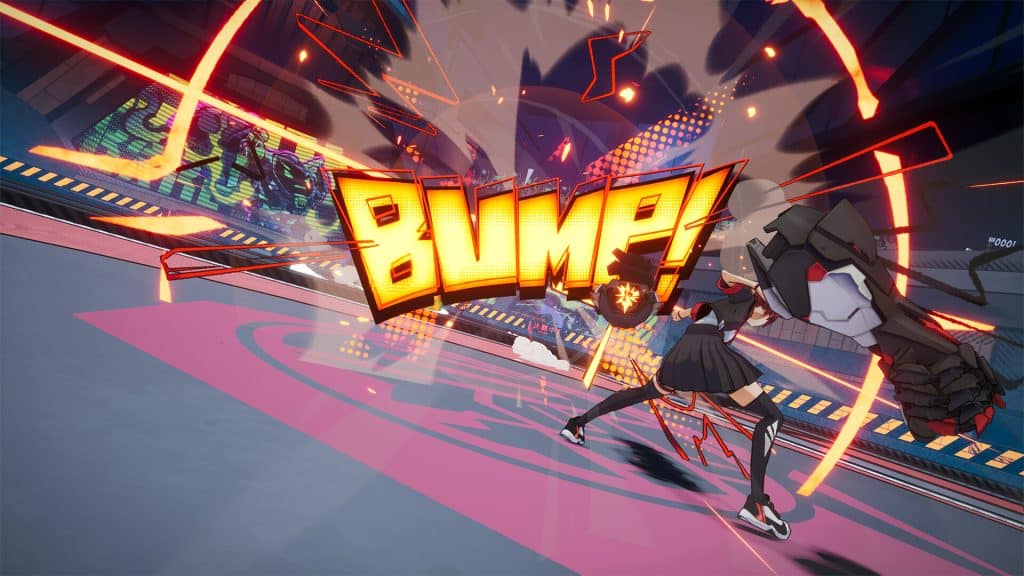
The game emphasizes a “no-rules,” high-intensity battle philosophy. How does that idea translate into actual gameplay systems? Where did you choose to give players freedom, and where did you deliberately impose constraints to keep matches readable, balanced, and exciting?
A:
When we say “no rules,” we mean we want players to intuitively grasp the objective without having to memorize a complex ruleset — the goal is simply to use the ball to incapacitate your opponent.
At the same time, we deliberately set one core constraint: all actions must revolve around the ball. This keeps the overall combat clear and readable, and prevents the system from spiraling out of control.
In short, we used “few but critical rules” to support a combat experience that feels free yet is actually highly controlled and full of tension.
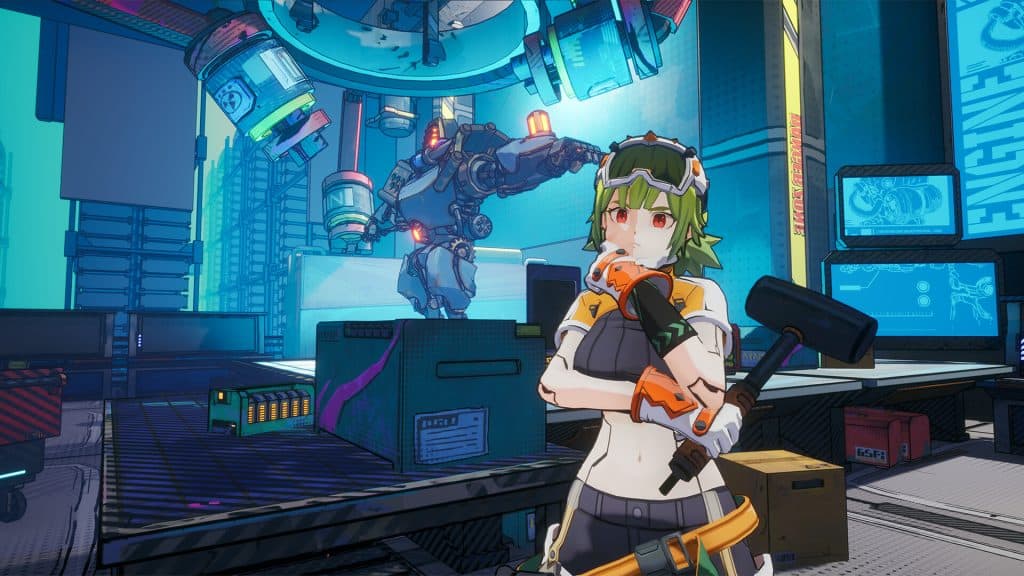
At its core, BAKUDO tells a personal story set against a larger sci-fi conflict. How did you approach balancing character-driven drama—like school rivalries and personal motivations—with world-level stakes that unfold over the course of the game?
A:
Our approach was to start from the characters and expand outward to the world.
At first, players encounter campus rivalries and personal growth, getting to know characters and their motivations through one battle at a time. As the story progresses, the larger crisis behind everything is gradually revealed.
We also made sure the two layers are interconnected — each battle isn’t just about winning or losing, but gradually points toward a greater conflict, linking the characters’ choices to the fate of the world.
Simply put, we use “character-driven storytelling” to draw players into the story, then let the world naturally be understood and amplified.
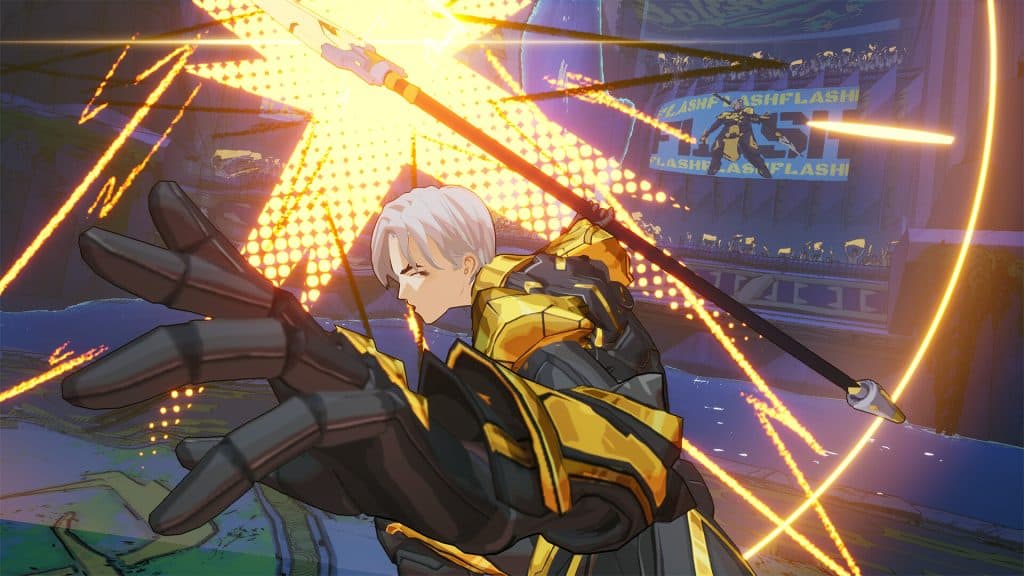
The Eight Stars function as both narrative rivals and gameplay bosses. When designing these characters, how did you differentiate them not just mechanically, but also visually and thematically? What role does personality play in shaping how each boss fight feels?
A:
When designing the Eight Stars, we started from how each one “plays ball” as the basis for differentiation.
For example — throwing with the hands, kicking with the feet, or using implements — actions rooted in real-world ball sports are extended into distinct combat mechanics and rhythms.
On top of that, we layered each character’s personality and style to amplify those differences, so each of the Eight Stars doesn’t just fight differently — the entire experience feels different.
In other words, a character’s personality isn’t just expressed in the story; it directly influences the rhythm, pressure, and strategy of the battle, giving each boss fight a distinctive identity that sticks with you.
Visually, BAKUDO combines anime-influenced character design with futuristic arenas and effects. What were the guiding principles behind the art direction, and how did you ensure visual clarity during fast, effects-heavy battles?
A:
Our core art principle is quite simple: every visual element must serve the two central focuses — the Boss and the ball.
Since all combat decisions revolve around these two things, character design, environments, and effects all deliberately step back to avoid pulling the player’s attention away.
Simply put, we’re going for a visual experience that looks spectacular but always keeps the essential information clear.
Music and sound design play a major role in selling intensity and emotion. How early did audio enter the development process, and how do music and sound effects help reinforce both the competitive energy of the fights and the emotional beats of the story?
A:
Sound design was developed in parallel with boss production, because sound itself is an important source of cues within combat.
During battles, we deliberately exaggerate the impact and swing sound effects to reinforce rhythm and feedback, while also incorporating elements like crowd cheering and applause to build a stronger competitive atmosphere.
In the story portions, music shifts the pace, helping players transition from high-intensity combat into emotional moments, deepening the connection to the characters and narrative.
Shueisha’s legacy is strongly tied to manga and storytelling. Did that background influence how you approached character arcs, rival dynamics, or dramatic pacing within the game? In what ways did working with a publisher rooted in narrative culture shape the project?
A:
Many of Shueisha’s outstanding works have genuinely inspired us in character building and dramatic pacing, particularly in how to handle character growth and rival dynamics.
During the collaboration, we also worked with them to discuss the script and narrative direction, refining the pacing and character expression through ongoing exchange.
This partnership allowed us to maintain our own creative voice while reaching a greater level of maturity and tension in the storytelling.
As a debut title, BAKUDO is notably ambitious. What were some of the hardest lessons learned during development—whether technical, creative, or organizational—and how did those challenges ultimately improve the game?
A:
BAKUDO’s combination of ball sports and action combat is relatively rare in the market, and there weren’t many existing examples to reference, so we spent a lot of time iterating on the gameplay, pacing, and feel.
But precisely because of that, we were forced to focus more intensely on the core experience itself, constantly testing what “fun” really means.
The process was difficult, but it also made the direction of the whole project clearer and more focused.
BAKUDO is structured around repeated high-stakes encounters rather than traditional progression. How did you approach difficulty tuning and player learning, especially in a boss-focused game where repetition is part of mastery rather than filler?
A:
Our design allows “repeated attempts” to carry two forms of growth simultaneously: one is the player’s deepening understanding of mechanics and rhythm, and the other is the character’s own progression system.
In boss design, the attacks and rhythms of each fight are learnable and predictable — players gradually master the timing and responses through repeated challenges.
We will also provide a measured growth system so that beyond pure execution, players can adjust their combat approach through builds and upgrades.
The game places strong emphasis on conviction, resolve, and identity. How did these themes influence your decisions across gameplay systems, narrative moments, and character design? Were there moments where theme directly guided a mechanical choice?
A:
In terms of gameplay, the “BAKUDO Gauge” is a manifestation of conviction and determination — when players are lost and unable to read the situation, the value drains more easily; but as players gradually understand the boss’s rhythm and mechanics, the BAKUDO Gauge stabilizes and even recovers.
In the story and character design, we also build characters’ motivations, conflicts, and growth around these themes, so each confrontation is not only a mechanical challenge but also a clash of convictions.
And from a broader experiential perspective, the cycle of failing, trying again, and finally defeating the boss is itself an embodiment of “conviction gradually being built.”
We want these themes not to be things merely spoken aloud in the story, but things players can actually play through and feel.
Looking back on development, what aspect of BAKUDO best represents what your team wanted to prove or express with this project? And what do you hope players understand about the game—and about your studio—after they finish their journey?
A:
It’s not just the characters in the game who face challenges — we went through a great deal of difficulty and uncertainty during development as well. But it was precisely that conviction of “wanting to see this thing made” that carried us, step by step, to where we are today.
We hope that when players finish this journey, they don’t just remember the combat or the characters, but truly feel that process of “starting from not understanding, gradually getting a grip, and finally breaking through.”
We also hope they come away feeling that this is an honest piece of work — and that it came from a team that genuinely cared about doing it right.
As Arthur Huang makes clear, BAKUDO is a game shaped as much by creative discipline as by ambition. Its unusual blend of boss-rush structure, ball-based combat, school rivalry, and sci-fi storytelling did not emerge from a desire to combine genres for its own sake, but from a deliberate effort to build a focused experience around tension, clarity, and escalation. That philosophy appears to define the project at every level, from combat readability and boss identity to progression, sound design, and narrative pacing.
What stands out most is the consistency of that vision. BAKUDO is not simply presenting repeated boss fights as spectacle, but as a process of learning, adaptation, and conviction — themes the team clearly sees as central to both the player’s journey and the game’s broader identity. If the finished release delivers on that intent, BAKUDO could distinguish itself not only through its concept, but through the precision with which that concept is carried across the entire experience.