

Take Off
It has been four years since The Devil in Me, and in that stretch I started to wonder whether Supermassive Games had any new tricks left inside its choose-your-fate horror formula. Then Directive 8020 lands, drags the whole anthology twelve light-years from Earth, and reminds me why I keep coming back to this studio whenever I want an evening of paranoia and morally compromising decisions. After a good chunk of last week aboard the colony ship Cassiopeia, I can say this is the boldest the series has been since House of Ashes, even when it trips over its own ambitions.
What the Game Is About
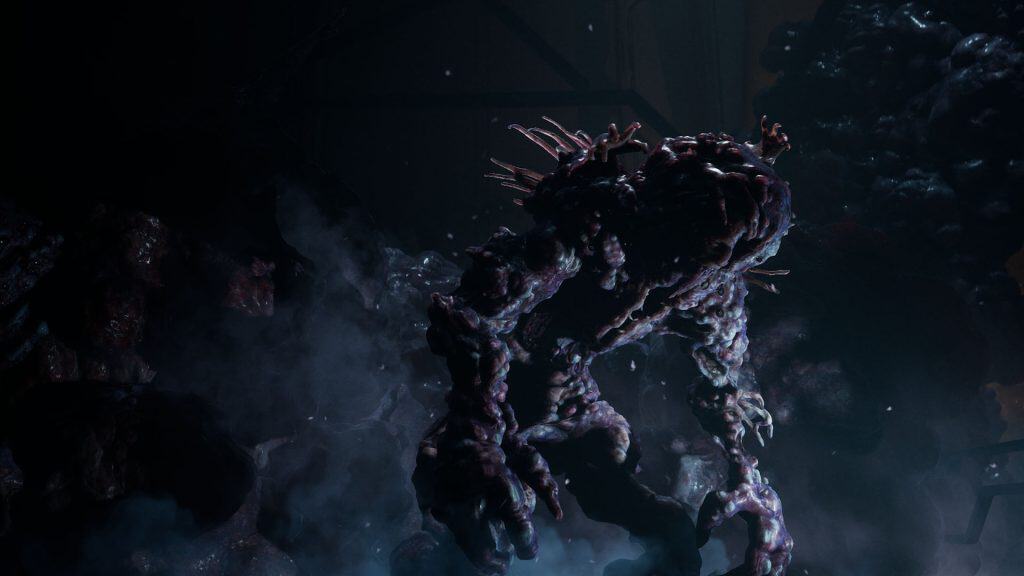
The setup borrows shamelessly from the two best sci-fi horror films ever made, and I mean that as a compliment. Earth is dying. The Cassiopeia is en route to Tau Ceti f, humanity’s last roll of the dice, when something gets pulled aboard. That something can mimic the bodies, voices, and quirks of the people you spent the last decade beside in hypersleep. The crew wakes up scattered across a damaged ship, no longer sure who is human, who is not, and whether the colleague who just smiled at them is about to peel their face off.
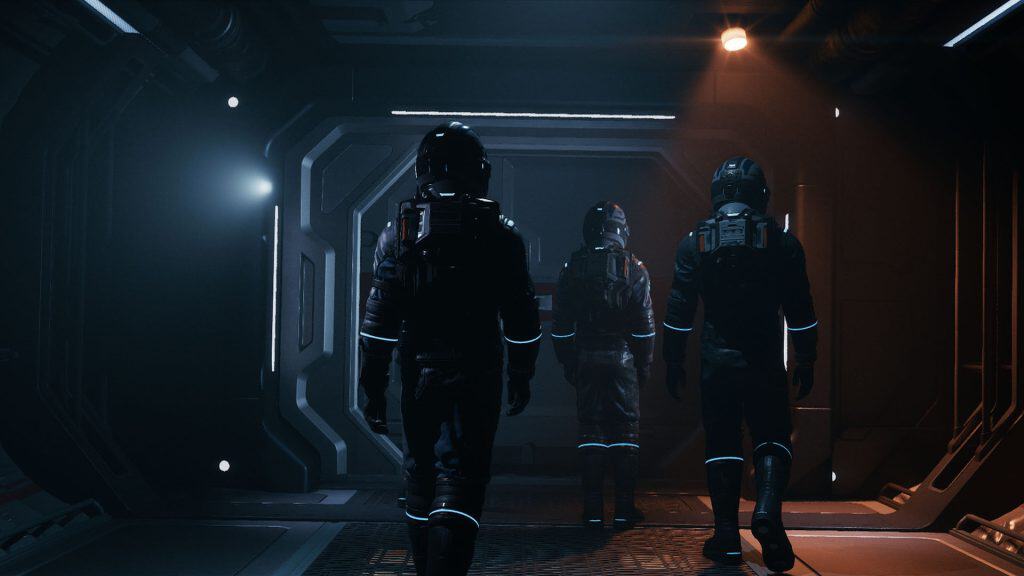
The story unfolds across five playable protagonists and eight television-style episodes, each running roughly an hour, with the Cassiopeia’s emergency klaxons doubling as your episode breaks. Lashana Lynch headlines as Brianna Young, the co-pilot trying to keep her crew alive long enough to send a warning to a second colony ship six months behind. She is excellent. She delivers the kind of grounded, weary performance the script does not always deserve.
Gameplay
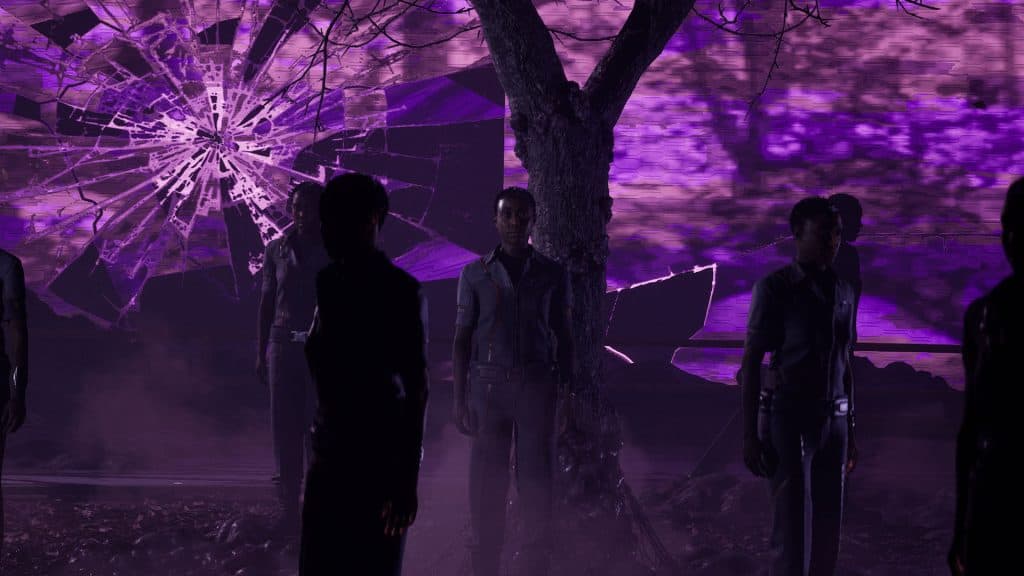
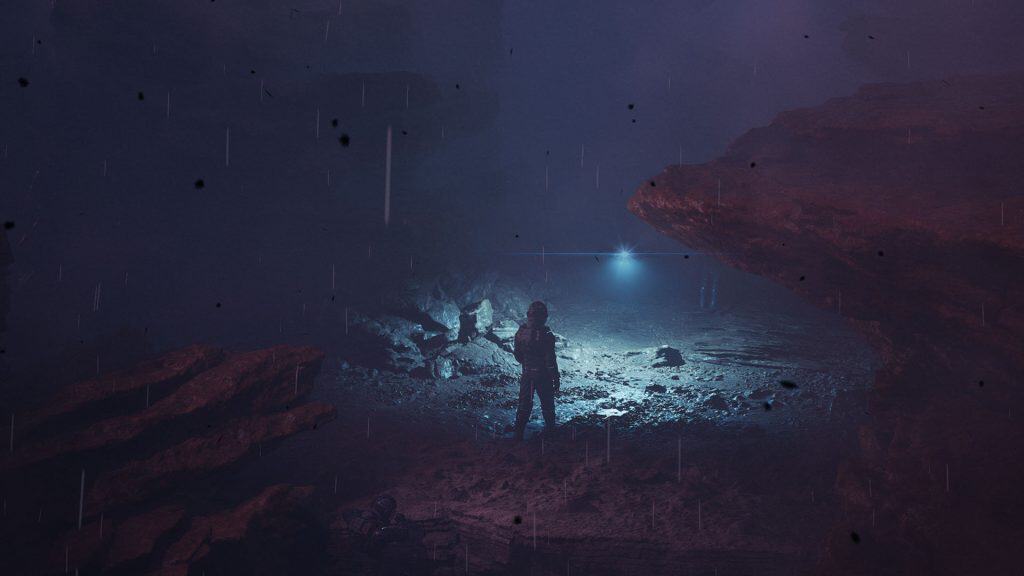
This is where Supermassive has done its most interesting work in years. The shift hit me inside the first hour. The fixed cinematic camera that defined Until Dawn and the early Dark Pictures games has finally been retired in favor of a fully controllable, over-the-shoulder third-person view that flips to first-person whenever you crawl through a vent or maintenance shaft. That sounds like a small change. In practice, it rewires how every encounter feels. You are no longer a passenger watching a horror film. You are the idiot creeping down a corridor with your flashlight off, hoping the mimic in the next room is sound-sensitive enough to ignore you if you stop breathing.
The headline addition is stealth. Each protagonist carries a handheld scanner that pulses the environment and outlines threats through walls for a few seconds, plus an electric baton that buys you a window to run if you get spotted. Stepping on broken glass announces your presence. Flicking the torch on at the wrong moment ends the chapter. I love the concept. The execution is less consistent. Enemy patrol patterns are simple enough that you can clock them within a couple of minutes, which means the dread of those early encounters thins out by the back half of the game. Some sequences sing, particularly the engine bay set piece and a late-game chapter I will not spoil here. Others feel like padding designed to justify the new toy.
Where Supermassive deserves real credit is the Turning Points system. In Explorer difficulty, the menu lets you rewind to any pivotal scene and reroute the story without restarting from a chapter select. Survivor difficulty locks that out, which is the right call for purists. I bounced between both. Being able to roll back a botched stealth section, or test how a death plays out elsewhere in the timeline, removed the frustration that used to send me to YouTube playlists rather than my save file. It is the single best quality-of-life improvement the series has ever shipped.
Combat is intentionally limited. The creative team made it clear before launch that this is a game about evading aliens, not gunning them down, so the closest thing to a weapon is the stun baton. Solid choice. The few moments of direct confrontation are tense because of how vulnerable you actually are.
Story
The plot is less original than the staging suggests. If you have watched Alien, The Thing, Event Horizon, or even The Faculty, you will see most of the beats coming. There is a scene where the crew has to prove their humanity by stepping through a bioscanner, and it hits exactly the buttons you expect. What saves the writing from feeling like a checklist is how willing it is to commit to its characters’ messy histories together, and a couple of late twists that genuinely caught me off guard. Without spoiling anything, one connection to an earlier entry in the anthology recontextualized a story I thought I had filed away years ago. I paused the game to sit with it for a moment.
The performances are uneven. Lynch is strong throughout, and the supporting cast lands more often than not. There are still pockets of dialogue where the line reads feel stilted, and the script occasionally leans on the kind of crew banter that exists only in screenplays. None of it broke immersion enough to pull me out, but I noticed.
Soundtrack
Jason Graves is back, and this time he has been allowed to stretch. His score leans hard on low brass, scraping strings, and synth drones that sit under your sternum until a chapter ends and you realize your shoulders have been at your ears for forty minutes. The sound design around the alien is genuinely unsettling. Wet, percussive, halfway between something organic and something that should not be organic. The Cassiopeia herself has a voice, a low constant hum of hull stress and recycled air that the team mixes brilliantly through headphones.
There is also a brand new single from Blood Red Shoes called “Dead Air” that anchors one of the later sequences, and it is exactly the kind of scuzzy, paranoid rock track that fits this game’s mood. The opening uses a melancholy electro-pop cover of the 1931 jazz standard “All of Me” that I cannot stop thinking about, setting a tone of intimacy and loss that contrasts beautifully with the body horror that follows.
Player Experience on Xbox Series X
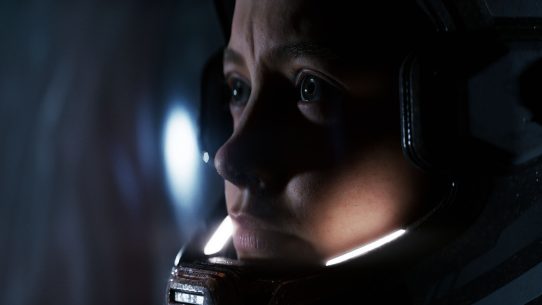
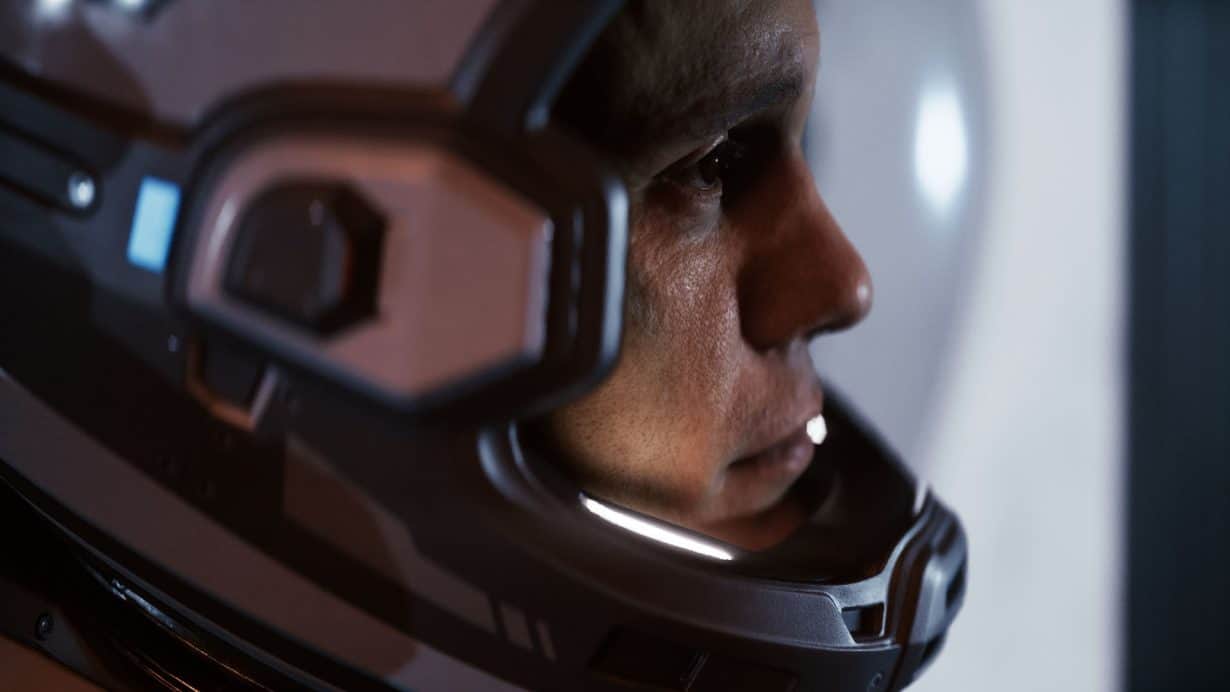
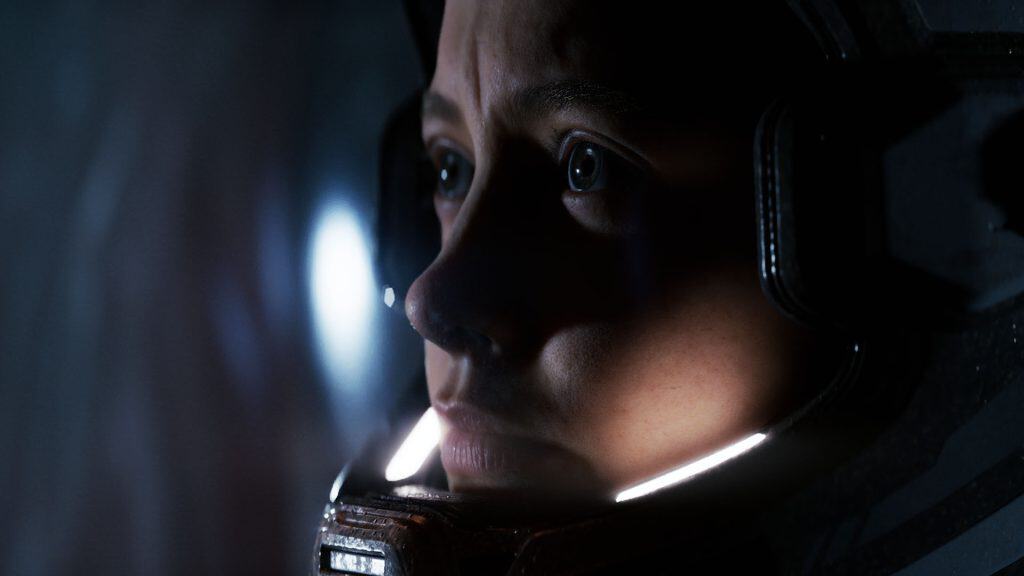
On Series X, Directive 8020 is the cleanest Supermassive release I have played. The target is 4K at 60 frames per second and the game generally holds it, with the occasional dip when the lighting goes wild during a creature encounter. Unreal Engine 5 has been kind to the studio. Facial capture is the best the team has ever produced. Early in the game my partner walked past, saw a close-up of Lynch on screen, and asked what film I was watching.
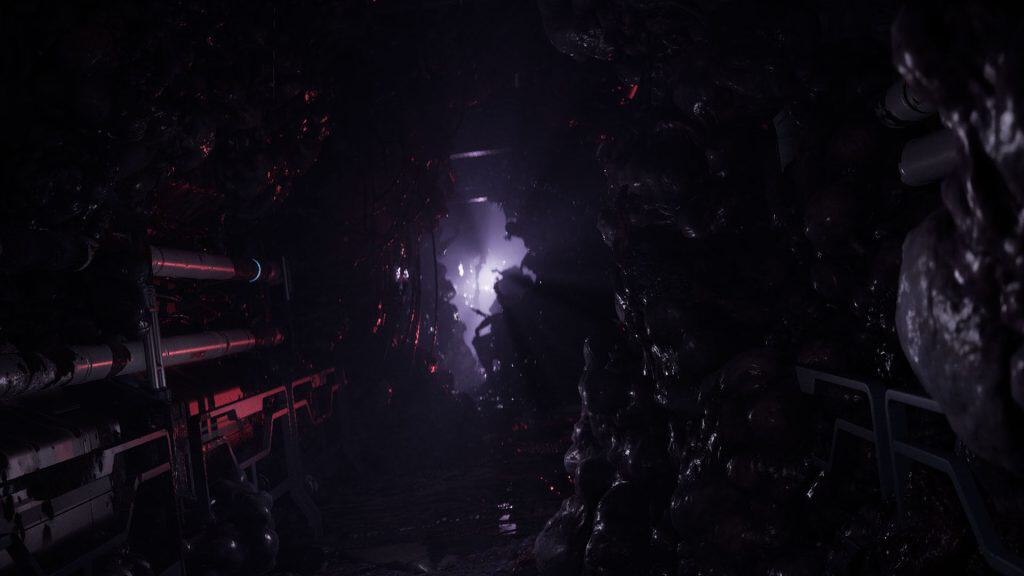
Loading is near-instant between chapters thanks to the SSD, and switching between Explorer and Survivor difficulty mid-run worked without a hitch. Couch co-op for up to five players in Movie Night mode is here too, and it remains the best way to play these games if you can corral friends for an evening. Over my roughly nine-hour run I noticed two minor visual hitches, both during heavy particle effects, neither serious enough to register as a complaint. HDR implementation is excellent. Dark corridors actually feel dark, which matters more in this game than in most.
Verdict
Directive 8020 is the most confident Supermassive has felt in years. Turning Points fixes the single biggest frustration of the older Dark Pictures games. The shift to a fully controllable camera makes encounters feel like horror rather than horror-adjacent. The story borrows heavily but commits to its references with real craft, and the production values are easily a generation above where this series sat four years ago. The stealth is the weak link, repetitive in a way that flattens the back half, and the writing occasionally lets a strong cast down. None of that ruins the trip. If you have ever enjoyed a Supermassive game, this one will pay you back. If you bounced off the earlier entries, this is the one to come back for.