


Aya Games has built a wordless horror fable from Armenian folk song and Soviet-era surrealism, then asked it to stand on platforming that cannot hold the weight. The art earns your attention; the controls spend it.
A morality play in a genre that demands precision
The 2.5D horror platformer is a deceptively strict form. Limbo, Inside and Little Nightmares made it look effortless: a small figure, a hostile world, no words, a camera that glides along beside you. What those games hid behind their atmosphere was an almost fanatical attention to how a character leaves the ground and lands again. Strip that away and the whole genre collapses, because when every death is a single misjudged jump, the jump has to be beyond reproach.
Ayasa: Shadows of Silence, the debut from the independent studio Aya Games, arrives on PlayStation 5 with everything the genre’s surface requires and very little of the discipline underneath. It has one of the most distinctive visual lineages I have seen in a console horror game, a score rooted in Armenian folk music, and a premise with real moral ambition. It also has a jump that does not answer when you ask it to. Aya Games kindly provided a PS5 code for this review, and I saw the game through to its conclusion, across all six of its lands.
The result is a game I respect far more than I enjoyed, and the distance between those two things is the subject of this review.

Six lands named for virtues and failings
The setting is the Inverted World, a realm once held in balance between light and shadow under an entity called Tas, the Absolute. War has broken that harmony, and darkness is spreading through six lands named Faith, Hope, Love, Greed, Indifference and Betrayal. Ayasa, a young girl traveling alone, sets out to recover the scattered remnants of Tas’s light and restore what was lost.
It is an old allegorical structure, closer to a medieval morality play than to a conventional adventure, and each land takes its name seriously. Greed is the most legible: its streets are populated by pig-masked figures hunched over their hoards, grotesque enough to be funny for a moment and unpleasant enough to stop being funny the moment they notice you. Other lands are more abstract, and the game trusts you to read them through architecture, color and the behavior of the creatures that inhabit them.
There is no dialogue at all. Not a line of text in the story, not a voice. Everything arrives through movement, imagery and music, which is a bold commitment for a debut and the right one for this material. The game adds a quieter layer on top: mysteries Ayasa leaves unresolved can pull her toward the darkness and shape who she becomes. Curiosity, in other words, carries moral weight, which is a lovely idea for a game about conscience.

A jump you cannot trust
Then you have to cross a gap, and the trouble starts.
The core of Ayasa is platforming, and the platforming is built on an input that hesitates. Press jump and there is a perceptible delay before Ayasa leaves the ground, inconsistent enough that you cannot simply learn to press early. Movement in the air floats rather than commits. Collision is unreliable at the edges, so a landing that looks clean on screen can still drop you into the void below. In a genre where most deaths come down to a single jump, this is not a rough edge. It is the foundation cracking.
The camera compounds it. It cannot be moved, which is normal for the form, but it does not always frame what you need to see, and it swings into angles that make judging depth harder than it should be. On occasion it hangs in place, which leaves no option but the last checkpoint.
The tragedy is that the systems on top of this foundation are genuinely interesting. Ayasa gains three powers over the course of the game. Flow rewinds time, letting her undo a mistake or reset a sequence that went wrong. Light illuminates hidden routes and wakes dormant machinery. Space makes her invisible, an escape hatch for the encounters too dangerous to face. Each one changes how you read a room, and the best puzzles ask you to think about all three at once.
There is a bitter irony in a game that hands you a rewind power and then makes you need it for the wrong reasons. Flow was clearly designed to let you experiment with timing puzzles. In practice it becomes a correction for jumps the game should have honored the first time.

Stealth as a coin toss
The creatures of the Inverted World are too dangerous to fight, so getting past them is a matter of observation, timing and stealth. In principle, that is exactly the right design for a story about a vulnerable child. In practice, the rules of detection are opaque. Some enemies seem to hear Ayasa from implausible distances, others ignore her at arm’s length, and several move far faster than she can, so an encounter that goes wrong is usually over before you understand why.
The trial-and-error rhythm this creates is the enemy of horror. Fear depends on believing you could have survived if you had been more careful. When survival feels arbitrary, dread turns into irritation, and the creatures, however striking their designs, become obstacles to memorize rather than presences to fear.
The environmental puzzles fare better, but they are hampered by a lack of guidance. It is often unclear which objects Ayasa can interact with, and the game’s refusal to explain anything, admirable in its storytelling, sometimes extends to basic signposting. Wordlessness is a style. Illegibility is a fault, and Ayasa does not always know the difference.
Parajanov on a console
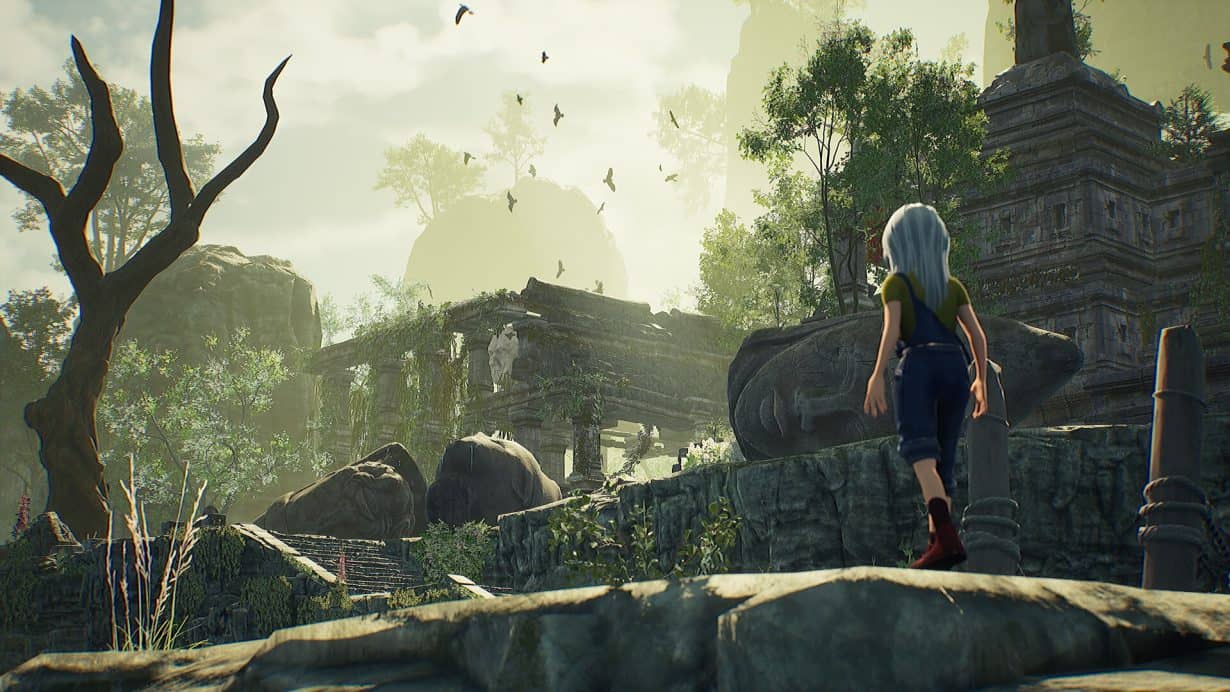
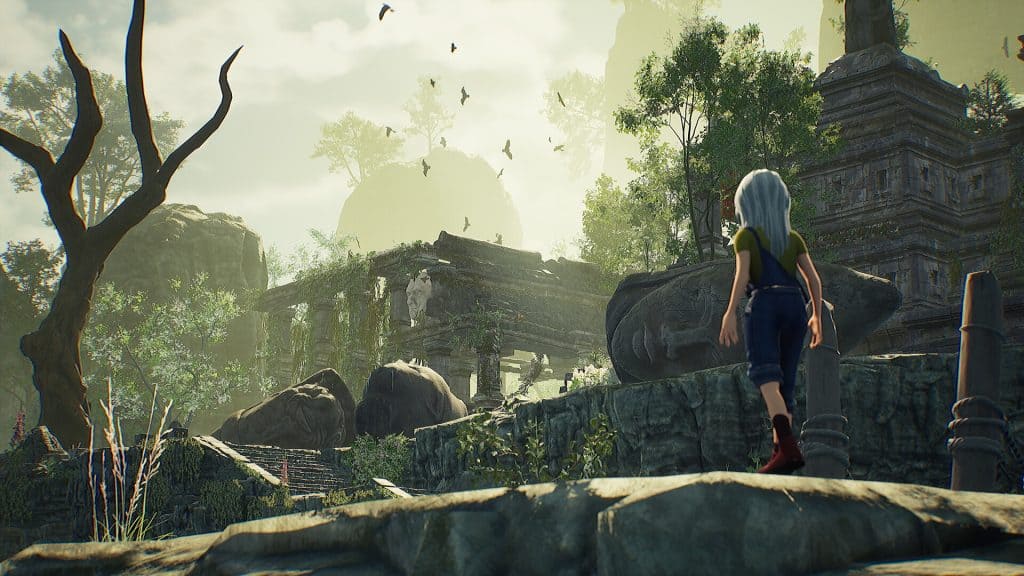
Here is where the game earns every bit of its reputation. Aya Games, split between Armenia and the United States, names Sergei Parajanov, Robert Sahakyants, René Laloux, Hayao Miyazaki and Tim Burton as its influences, and for once the list is not decoration. Parajanov’s tableau compositions and Sahakyants’s surreal Soviet-era animation are almost unheard of as reference points for a horror game, and you can see both in the way scenes are composed: flat, frontal and symbolic, as if each screen were a painted panel in a folk icon rather than a level in a game.
The creature design is the standout. Enemies have an elongated, distorted quality that sits somewhere between expressionist cinema and anime horror, and it gives the game an identity no other entry in the genre shares. The environmental art is dense with storytelling detail, the cinematic interludes are composed with genuine care, and several of the lands contain images I will remember long after the frustrations fade.
The PS5 version does not do that art justice on the technical side. Those cinematic sequences suffer from frame pacing problems that spoil otherwise beautiful compositions. Loading is slow, and it is at its most punishing when you die and respawn, which, given everything above, is constantly. A game built on repetition cannot afford to make each attempt wait.
The studio has rolled out a series of updates since the PC launch and calls the console release the best version of the game to date. That may well be true. It is not the same as saying the game is ready.

Komitas in the dark
The soundtrack is the other place where Ayasa is unambiguously excellent. Composer Arman Msryan draws on the music of Komitas, the priest and musicologist who collected and transcribed Armenian folk song, and the result is a score that feels ancient and mournful in a way few game soundtracks attempt. It is emotional without being manipulative, and it gives the Inverted World a cultural specificity that its images alone could only suggest.
In a game without words, music does a great deal of the narrative work, and Msryan’s score carries that responsibility with grace. It tells you when a land has lost something, when Ayasa is in danger, when a moment matters. Sound design around it is effective too, with creature noises that unsettle long before the creatures themselves appear. This is the one part of the game I would recommend to anyone without reservation.

Who it is for, and what it asks
Ayasa is a linear experience, and its six lands make for a compact journey on paper. The trouble is that the time you spend with it is padded by deaths that are rarely your fault and loading screens that make each one sting. The pacing it intended, a measured walk through a haunted gallery, keeps breaking into stop-start repetition.
The most serious problem is one that patience cannot fix. The game can softlock, leaving Ayasa trapped in a state the checkpoint system cannot recover from. For a puzzle-platformer, that is the defect that matters most, because it turns a frustrating game into one you may not be able to finish without restarting a section or more.
That is a shame, because the audience most likely to love Ayasa is not necessarily the audience most tolerant of fiddly platforming. The art and music argue for being seen and heard by people who come to games the way they come to animation festivals, and the controls stand squarely in their way.

Verdict
Ayasa: Shadows of Silence is two games occupying the same space. One is a beautiful, wordless fable built on Komitas and Parajanov, with creature design and a score that nothing else in the genre can match and a moral premise that turns curiosity itself into a choice. The other is a platformer whose jump hesitates, whose camera fights you, whose stealth rules feel arbitrary and whose technical foundation is still unsteady on PS5, softlocks included.
The first game deserves an audience. The second makes it very hard to recommend that audience spend its evenings here. The art direction is serious work, the ambition is real, and Aya Games clearly has a voice worth hearing. The execution simply has not caught up with it.
Play it if the visual and musical lineage is the reason you are interested, you have real patience for trial and error, and you are willing to wait for further patches. Skip it for now if you want a horror platformer that plays as well as it looks; the genre’s best work is still where it was, and Ayasa is not yet ready to stand beside it.