

Nintendo spent the Switch 2’s power on detail rather than speed, which suits a game about tiny things, and turned Pikmin’s oldest idea, the race against the clock, into a weekend timetable that still has to earn its place.
A world built at ankle height
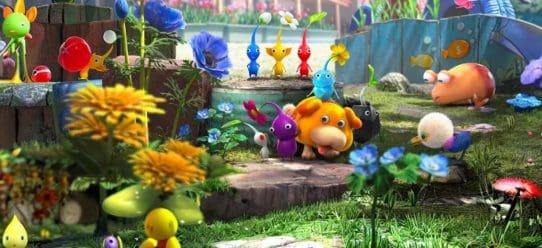
Pikmin has always asked you to look down. The series puts you at the height of a bottle cap, in gardens, kitchens and bathtubs where a dead battery counts as treasure and a frog counts as a natural disaster, and nearly all of its pleasure comes from reading that terrain quickly: which ledge hides a route, which wall a squad can knock through, what that glint behind the paving stone actually is. It is a game about looking closely. On Switch 2, Nintendo has spent the new hardware accordingly.
Pikmin 4 first arrived on the original Switch in July 2023 as the most approachable entry in the series and comfortably its largest. This Nintendo Switch 2 Edition keeps that game intact and carries your save file across. On top of it sit a native 4K image in TV mode and 1080p in handheld, voice commands for Oatchi through the console’s built-in microphone, GameShare support for Dandori Battles, and Dandori Academy, a timed exam mode that runs on a calendar. Nintendo kindly provided the game for this review. I went back through the full campaign and Olimar’s epilogue on Switch 2, then sat the first Academy exams the moment the window opened.
What Nintendo did not change is the thing everyone is arguing about. The frame rate stays at 30fps, exactly where it was in 2023. I will get to why that bothers me less than it should, and why it still bothers me.

What Pikmin 4 is about
You play a rookie in the Rescue Corps, a crew of tiny spacefarers sent to the planet PNF-404 to find Captain Olimar and the earlier rescuers who crashed while looking for him. For the first time in the series, the leader is a character you design yourself. The job splits three ways: recovering stranded crew members, hauling home the treasures that power the ship (household objects and food, each catalogued with a dry, cheerfully wrong alien reading of what it is), and growing the Pikmin, the plant creatures who do every bit of the carrying, fighting and building on your behalf.
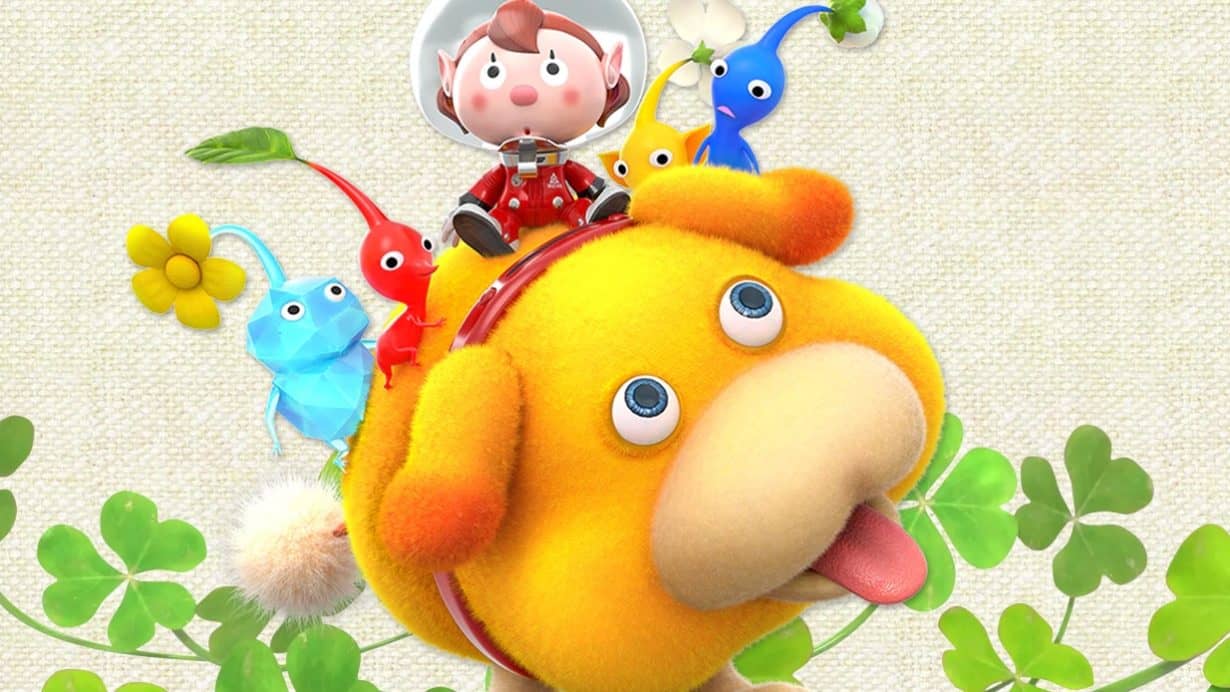
The cast of Pikmin is the series’ real toolkit. Reds shrug off fire, Blues work underwater, Yellows survive electricity and fly higher when thrown, Rock Pikmin shatter crystal, and Winged Pikmin lift loads over gaps. Pikmin 4 adds two of its own. Ice Pikmin freeze enemies and turn ponds into walkable sheets, and Glow Pikmin come out after dark, when the game switches into a defensive night mode built around them.
The map alternates between large surface areas, from the garden sprawl of Sun-Speckled Terrace to the beach of Serene Shores, and caves that descend floor by floor beneath them. Developed by Nintendo EPD with Eighting, under chief director Yuji Kando, who has worked on every Pikmin game since the first, it is the most content-heavy game the series has produced. That remains true in 2026, and it is the foundation everything in this edition rests on.

Gameplay: dandori with a safety net
Dandori is the Japanese word for working out the order of things, and in Pikmin it describes the whole game: sending one squad to build a bridge while another carries a treasure home and a third clears the enemies on the path ahead, so that nothing on the field is ever idle. Every Pikmin game has been about this. Pikmin 4 is the one that teaches it best.
Oatchi is the reason. The space dog is a mount, a ferry across water, a battering ram, a tracker that sniffs out treasure and lost Pikmin, and eventually a second leader you can split off and command on his own. His design does two jobs at once, lowering the barrier for newcomers while giving experienced players a fourth or fifth workstream to juggle, and both jobs land. Riding him through Sun-Speckled Terrace with a column of 100 Pikmin running behind is still one of the best feelings Nintendo has built in years.
The safety net extends further. Rewind Time lets you undo a disastrous fight by returning to the start of the day or a few minutes back, and the main campaign has no hard limit on days, so the clock exists to push you rather than to punish you. Veterans have long called that softness the game’s main weakness, and they had a point. The free update from November 2025 answered them with three creature activity levels, Relaxed, Normal and Fierce, switchable at any time. Fierce makes enemies more aggressive and harder to put down, and it is the right setting for anyone returning to a save they finished in 2023. The same update added the Field Camera, the Decor Pikmin from Pikmin Bloom and a Roll Over option for starting again with your progress carried forward. All of it is here.
I will be honest about where the controls still slip. Aiming a throw at a precise ledge from a fixed camera angle remains occasionally fiddly, and the lock-on, generous as it is, sometimes prefers a pebble to the enemy standing next to it. The Switch 2 Edition does nothing about either. It also ignores the Joy-Con 2 mouse controls entirely, which is a strange omission for a game whose entire input model is a cursor on the ground. A pointer you could flick across the screen would have suited Pikmin better than any other game in Nintendo’s catalog.
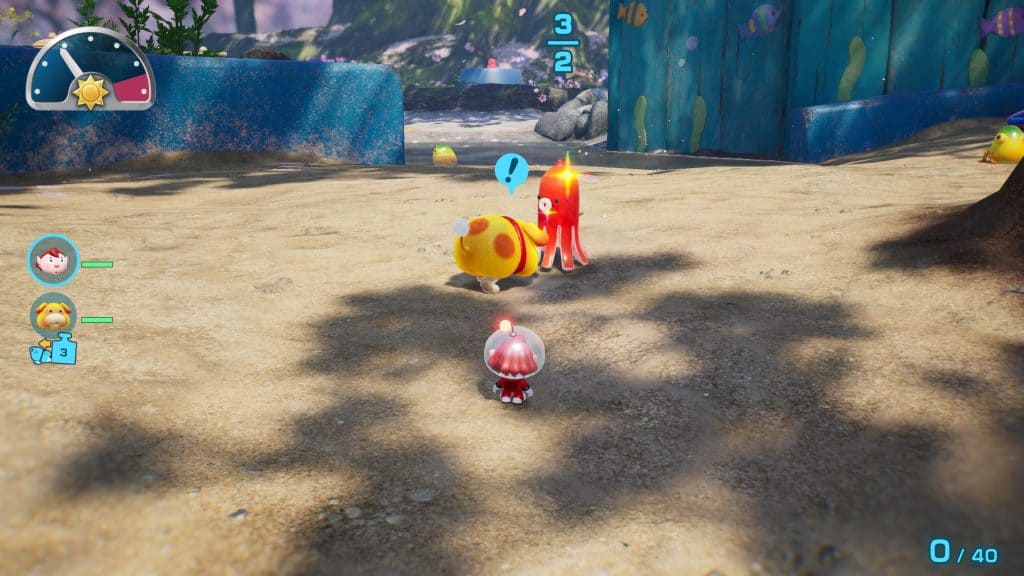
Dandori Academy, school on weekends
The headline addition sits on the title screen. Dandori Academy is a timed treasure-collection mode in the mold of the campaign’s Dandori Challenges: you drop into a compact stage with a fixed squad, a fixed Oatchi and a countdown, and you collect as much as you can before the clock hits zero. Three training stages teach the basics of transport, Pikmin abilities and shortcuts. After that, the stages are grouped by month and each comes in three grades, Elementary, Advanced and Graduate. Elementary runs with creatures set to Relaxed, while the higher grades tighten the timer, thin your Pikmin count and add enemies.
The structure is what makes the mode unusual. Practice is open every day, as often as you like. The exam itself, the run that counts, opens only from Friday to Sunday, and you get one attempt per stage. More attempts come from Redo Passes, earned by grinding practice runs, with a monthly cap. Your exam score stamps a medal on a card, from Bronze up through Platinum for clearing everything in time, and Master for clearing it faster still. Medals feed Dandori Points, which open up ID card colors, nicknames, photo frames and Pikmin Bloom gifts, and the results go up on global and friend leaderboards.
The stages themselves are the best thing Nintendo has added. Mushroom Mash and Treat Transport, two of the opening stages, are tightly built little puzzles where every second of travel matters and the optimal route only reveals itself after several practice runs. The weekend exam gives them a pulse. Knowing you have one official attempt changes how you play the practice runs during the week, and the Friday nerves are real.
The schedule is the problem. Six new stages arrive each month, for 72 over the coming year. That drip can be defended as a design decision, since the mode clearly exists to bring players back every weekend, but on launch week it means a sharp first exam session followed by a long stretch of waiting. Clear the month’s stages in style and there is nothing new to chase until the following month. The mode also gives surprisingly little ceremony to a great practice run, which is a shame in a game so good at small celebrations. Dandori Academy will almost certainly be the strongest part of this edition by next autumn. Right now it is an appointment with an empty diary.
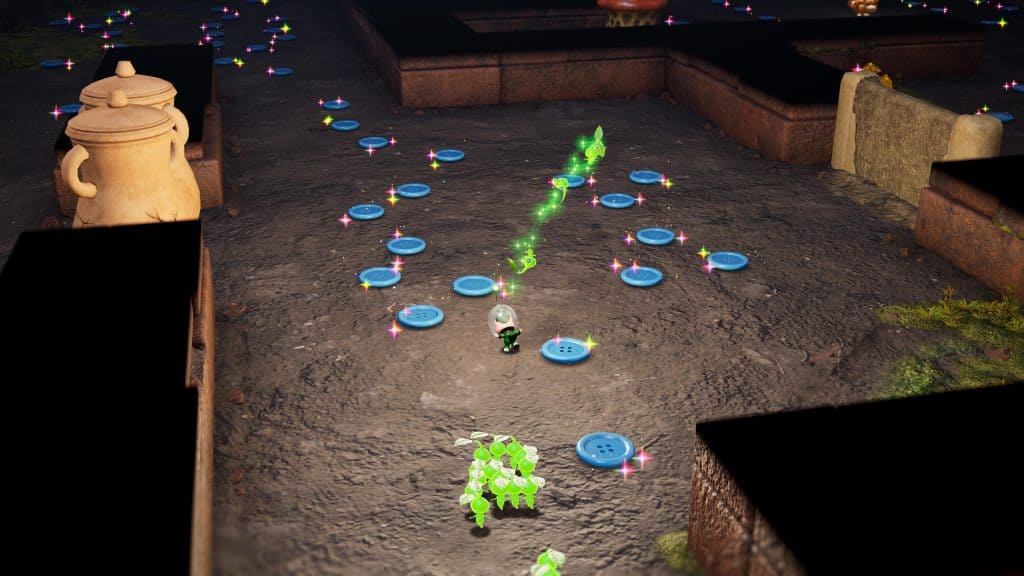
Talking to Oatchi
The other Switch 2 feature uses the console’s built-in microphone. Say “rush” and Oatchi charges, say “go to work” and he sets about the nearest task, and in handheld mode on a quiet evening the effect is genuinely charming, a small conversation with a dog who listens. Most commands register cleanly. The jump command lags just enough to be impractical when timing matters, which is exactly when you would want to use it.
I turned it off for the Academy, where half a second is a medal, and left it on for idle exploration, where it belongs. The option lives in the settings menu, which is the right place for a feature this optional.
Story
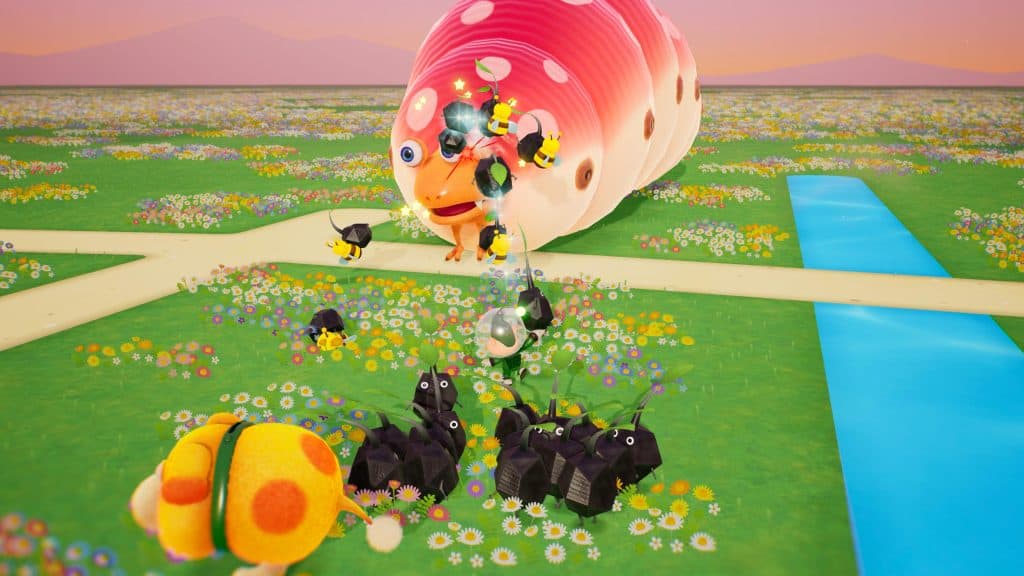
Pikmin stories are light by design, and this one is warmer than most. Each rescued crew member brings a personality and a small service back to base, the treasure notes are consistently funny, and the slow reveal of what happened to Olimar gives the campaign a spine without ever interrupting the work.
The best writing sits in the epilogue. Olimar’s Shipwreck Tale retells the crash from the first game as a self-contained side story, with only Red, Blue and Yellow Pikmin, a different canine companion named Moss in place of Oatchi, shorter days and a hard 15-day limit before Olimar’s life support fails. It is the closest Pikmin 4 comes to the tension of the 2001 original, and after the forgiving main campaign it lands as a deliberate change of key. On Fierce, it is properly demanding.

Graphics and performance on Switch 2
The resolution increase is the most generous visual upgrade Nintendo has given a Switch 2 Edition. The game now renders at native 4K docked and 1080p in handheld, and in a world built from close-up textures it changes the texture of the experience. Wet bathroom tiles read as tiles. Oatchi’s fur separates into strands. Leaves catch the afternoon light with a translucency that the original’s softer image smeared away. The Unreal Engine 4 foundation always had this detail in it, and the Switch 2 finally lets you see it, most of all on a large TV, where the old image used to blur into a pleasant watercolor.
Handheld is the quieter win. A full 1080p on a smaller panel makes distant treasure and stray Pikmin easier to spot at a glance, and in a game about scanning the ground, that matters more than it sounds.
Then the frame rate. Pikmin 4 runs at a locked 30fps, docked and handheld, as it did in 2023, and there is no performance mode to trade some of that resolution back for smoothness. The lock holds with 100 Pikmin, a boss and Oatchi on screen together, and Pikmin is a game of plans and cursors rather than reflexes, so the cost is smaller here than in an action game. Camera pans still feel heavy next to the 60fps Switch 2 Editions Nintendo has shipped for other games, and Dandori Battles, the most frantic thing in the package, are where you feel it most. Detail was the right priority for this game. A choice between the two would have been better.

Soundtrack and sound design
The score, by Kenta Nagata, Asuka Hayazaki and Soshi Abe under sound director Mitsuhiro Kida, is gentle and unhurried, built to sit under hours of planning without ever wearing on you. Area themes bloom and recede as you move, the cave music narrows the space around you, and night expeditions bring a percussive tension that the daytime game never asks for.
The sound effects carry as much information as the visuals. A Pikmin’s cry tells you when one has wandered off or is drowning before you see it, and the chorus of a squad hauling a treasure home is one of the series’ signature pleasures. Nothing here has been remixed for Switch 2, and nothing needed to be.
Player experience
As a full package, this is a very large game. The main campaign alone is a long, generous expedition, the caves and Dandori Challenges deepen it considerably, and Olimar’s epilogue plus the Roll Over restart give it a long tail. Dandori Academy now extends that tail across a full year.
Difficulty is finally a choice. Relaxed suits younger players and anyone who wants to explore without pressure, Normal is the 2023 game as it shipped, and Fierce gives veterans the bite the original lacked. Rewind Time remains the most humane failure system in any strategy game I know.
Co-op is still the weak spot. A second player in local co-op supports the leader by throwing pebbles at enemies and items, which is fine for a child sitting beside a parent and thin for anyone else. The competitive side fares better. Dandori Battles pit two players against each other in a race for treasure, and GameShare now lets a friend join on their own Switch 2 without owning the game, either locally or online through GameChat. That is the most practical improvement in the package for households and friendships with only one copy.
A free demo on the eShop includes Dandori Academy, which is the easiest way to find out whether the weekend exam format clicks with you before committing.

Verdict
Pikmin 4 is still one of the best games Nintendo made for the original Switch, and this is now the definitive way to play it. The 4K image genuinely changes how its miniature world reads, Dandori Academy contains the sharpest stage design in the game, and GameShare finally makes Dandori Battles easy to play with a friend. Against that, the frame rate is untouched, the Joy-Con 2 mouse controls are absent from a game that was made for them, and the Academy’s monthly schedule leaves it thin at launch.
If you never played Pikmin 4, start here, without hesitation. It is the best place in the series to begin and one of the most generous games on the console. If you finished it in 2023 and are hoping for a new campaign, hold off, because the Academy is the only fresh content and it arrives six stages at a time. And if you are the kind of player who likes a weekly ritual, an exam to prepare for and a leaderboard to climb, carry your save across, set creatures to Fierce and enroll.