
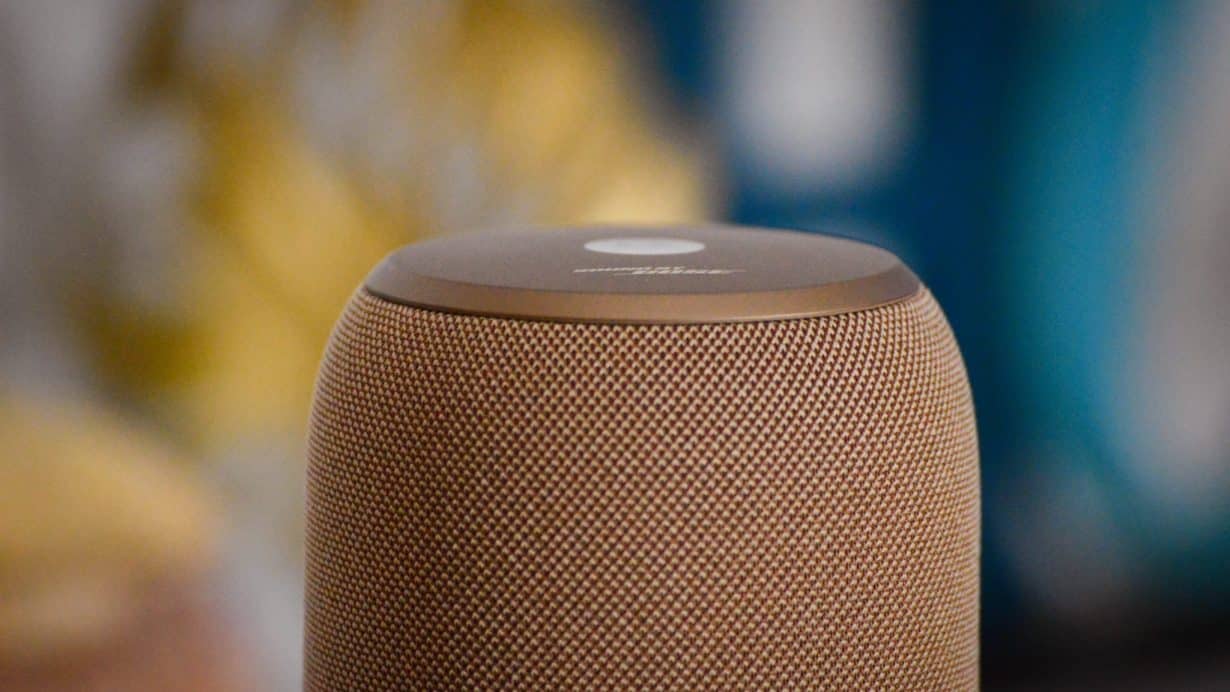

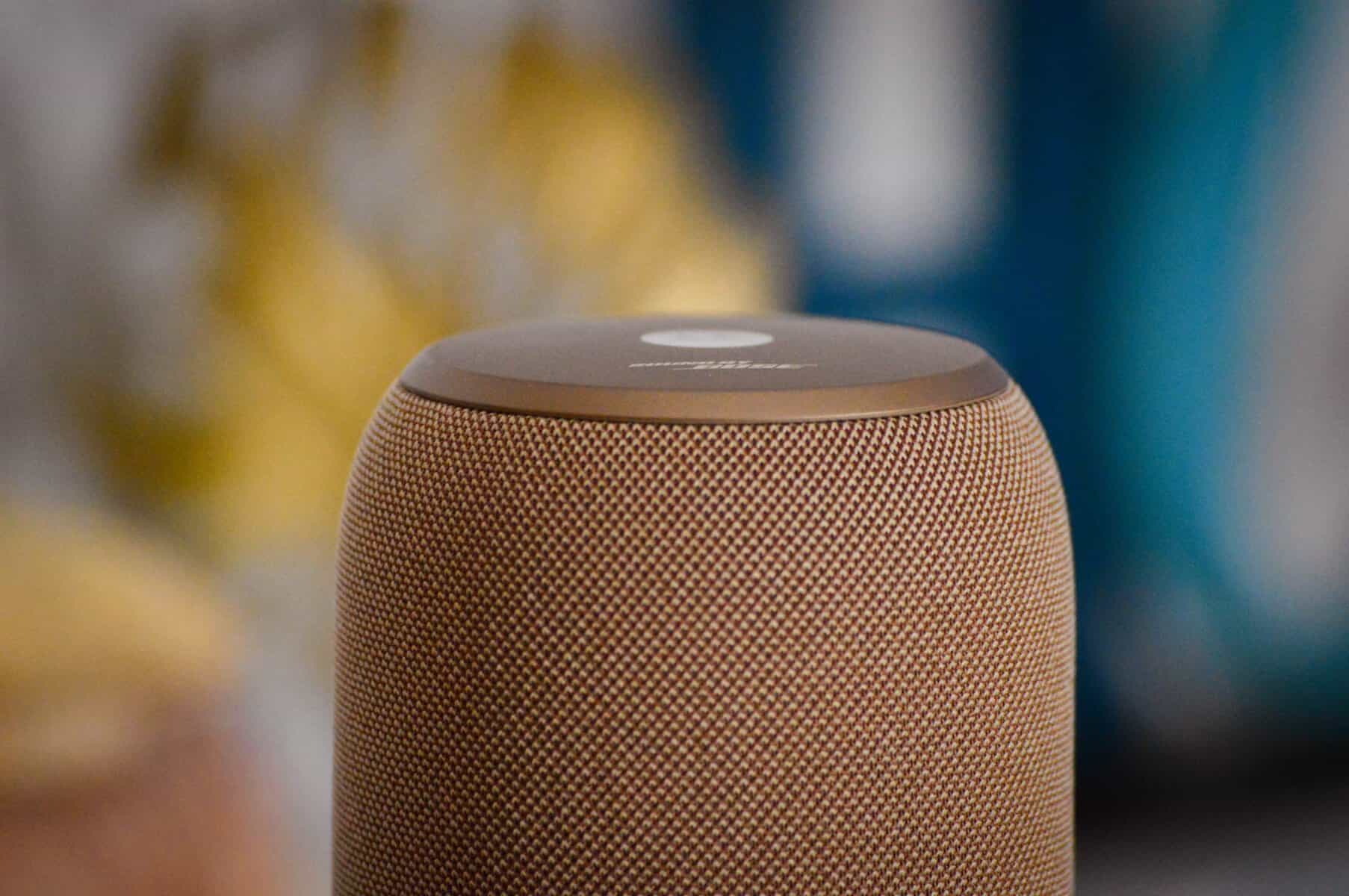
I have spent the last few weeks living with the moto sound flow, and I will say upfront what I usually save for the last paragraph: this is the most ambitious accessory Motorola has shipped in a very long time. It is the brand’s first proper standalone portable speaker, it arrived under the CES 2026 spotlight, and instead of playing it safe with another disposable cylinder of plastic, Motorola decided to court the audiophile crowd with Sound by Bose tuning, ultra wideband (UWB) tricks borrowed from the smartphone world, a chunky 30W output, and a dock that frankly looks like it belongs on the shelf of an interior design magazine. The result is a product I keep wanting to describe with the word “grown up.”
Let me walk you through everything I have learned about it.
A design that earns its place on the shelf
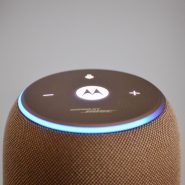
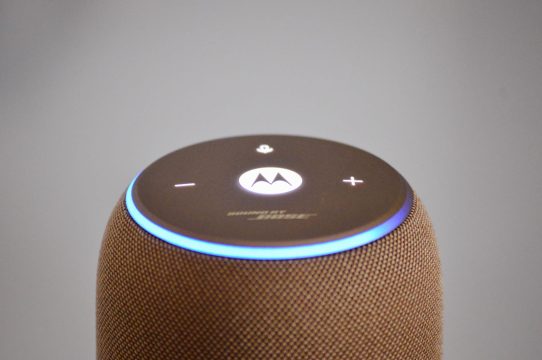
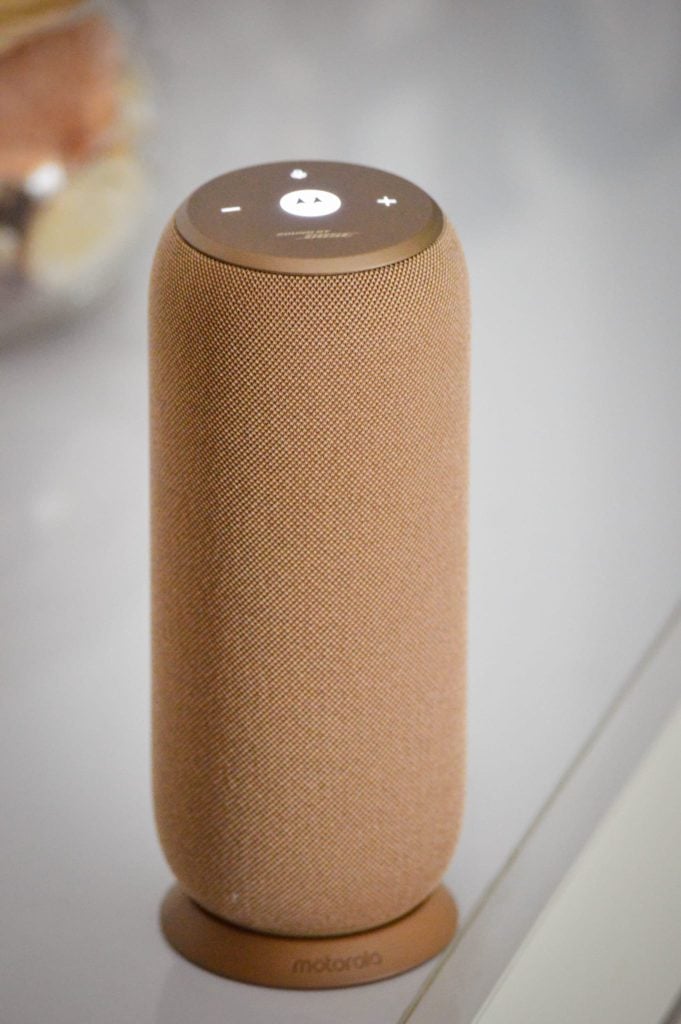
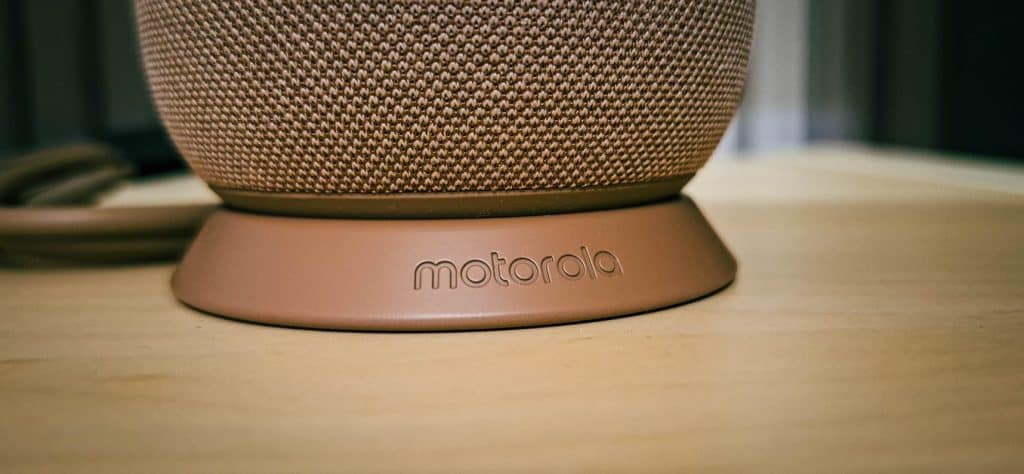
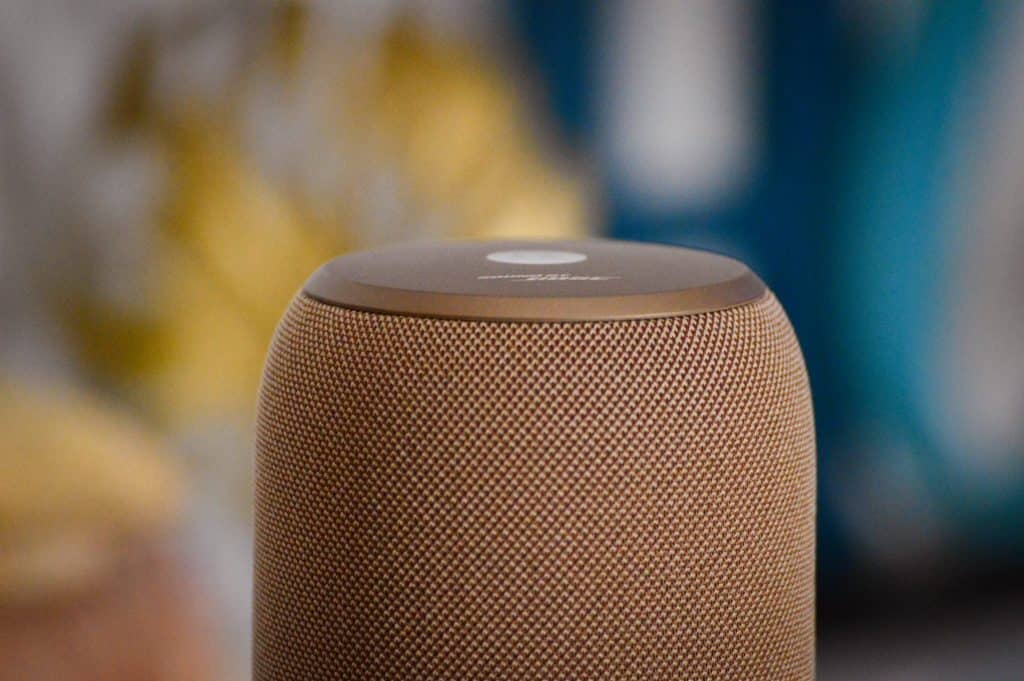
First impression matters and Motorola clearly understood the assignment. The moto sound flow ditches the rubberized, gym-bag aesthetic of so many portable speakers and instead wears a refined twill textured fabric that, in my Pantone Warm Taupe, reads as both technical and quietly luxurious. This is not a speaker designed to hide; it is designed to sit in the center of the living room.
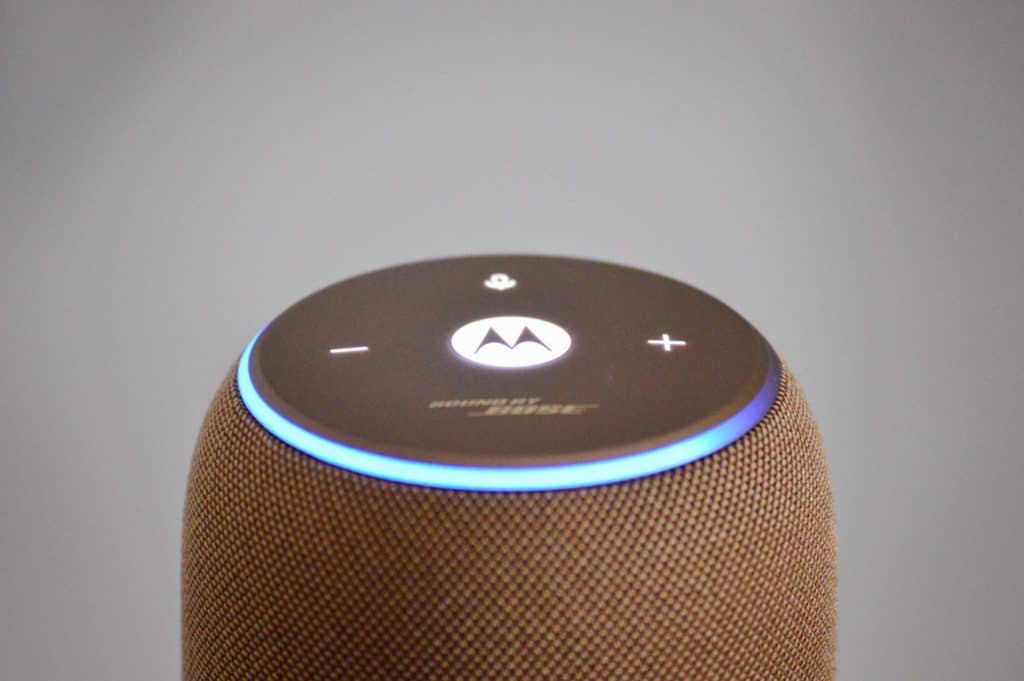
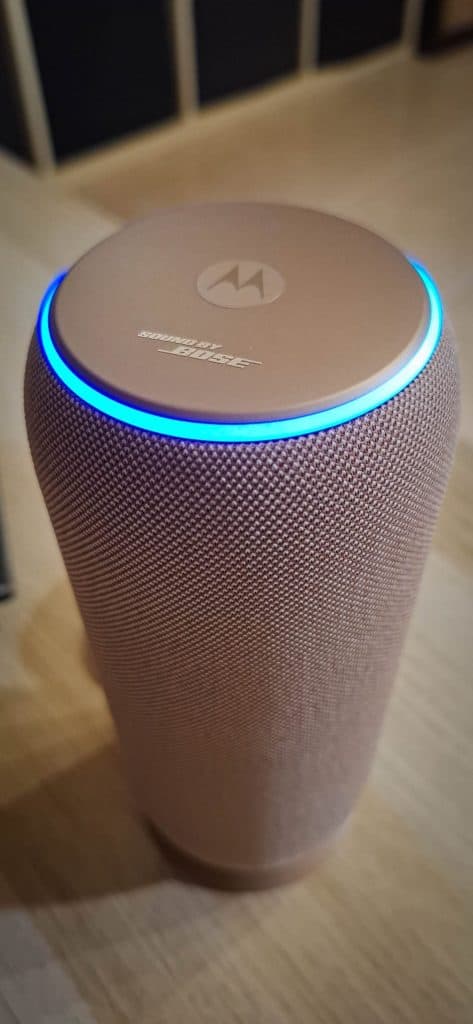
The cylindrical body is tall and slim, capped with a flat top that hosts the capacitive touch controls and a discreet LED ring that lights up to confirm pairing, charging status, and volume changes. The base is flat, which is critical because that is what allows the included charging dock to do its little party trick. You drop the speaker on, the contacts snap into alignment, and the LED breathes once to tell you it is sipping power. No cable wrangling. No fumbling for the USB-C port (which is still there on the back, by the way, for travel). For me, the dock is one of those quality of life details I did not know I wanted until I had it, and now every other speaker in my house feels slightly inconvenient by comparison.
It is also IP67 rated, meaning dust tight and capable of handling immersion in fresh water for short periods. That puts it firmly in “yes, you can take it to the pool” (which, by the way, I would never do).
Sound by Bose, and yes, you can hear it
The headline acoustic feature is the Sound by Bose tuning, and I want to be clear about what that means and what it does not mean. This is not a Bose speaker in a Motorola coat. It is a Motorola speaker whose drivers and DSP have been voiced under Bose’s expertise. In practice, what that means is that the moto sound flow does not have that “boomy, loudness-curve, please notice me” sound signature that plagues most portable speakers in this category. Instead, the tuning is balanced, with a midrange that lets vocals breathe and a treble that stays composed even when you push the volume well past polite-conversation levels.
Under the fabric, there is a dedicated 20W woofer, a 10W tweeter, and two passive radiators that handle the low end heavy lifting. That hardware pairing matters because the woofer and tweeter let the speaker reproduce a genuine two way response (instead of the typical full range single driver mush), while the passive radiators add the kind of physical bass extension that you simply cannot fake with a tiny enclosure and DSP voodoo. The 30W combined output is more than enough to fill a medium room, and outdoors it punches above its size class with confidence.
A few listening notes from my notebook. With acoustic material (Norah Jones, Bon Iver, Caetano Veloso), the moto sound flow shines. Vocals are present without being shouty, guitars have body, and there is a real sense of the recording space. With electronic music (Bonobo, Four Tet, Floating Points), the passive radiators carry their weight and the bass is taut rather than woolly. With anything heavily compressed, like modern pop or hip hop, the speaker stays composed at high volume, which is exactly where lesser speakers turn to mush. The treble can get a touch hot if you sit very close at maximum volume, but the companion app’s equalizer lets you trim that down to taste, and honestly at normal listening distances it is a non issue.
The UWB story is where this thing gets clever
Here is where the moto sound flow stops being “another portable speaker” and starts being a genuinely interesting piece of consumer electronics. Inside, there is an ultra wideband radio (the same kind of high precision short range tech you find in the latest flagship phones), and Motorola has used it to build a small suite of features that, when they work, feel like the future.
The first is Proximity Sensing. With a UWB equipped Android phone in hand, I can be listening to a podcast through my phone’s speaker, walk into the living room, and the audio just transfers to the moto sound flow as I get close. No button press. No “Hey [Assistant].” It just happens. Walk away and it hands the audio back. This is the kind of seamlessness that the smart home has been promising for a decade and almost never delivers.
The second is Dynamic Stereo. If you own two moto sound flow units, you can pair them and they will use the UWB chip in your phone to figure out which one should be the left channel and which one should be the right, based on where you are physically standing. Sit on the other side of the couch and the channels swap automatically. It is genuinely uncanny the first time you see it.
The third is Room Shift. In a multi speaker setup, the audio follows you to the speaker nearest your phone. Walk from the kitchen to the office and your music walks with you. It is the kind of thing Sonos has been trying to do with manual room groups for years, and Motorola is doing it with hardware that knows where you are.
I should be honest that all of this requires UWB compatible hardware on your phone, which today means flagship territory (a recent Motorola flagship, a Pixel with UWB, or a high end Galaxy). If you are on a midrange phone you will still get excellent Wi Fi and Bluetooth streaming, but the magic tricks are gated behind the right gear. Worth keeping in mind.
Connectivity that just works
On the more conventional side, the moto sound flow supports Wi Fi streaming with AirPlay, Google Cast, and Spotify Connect, plus Bluetooth 5 for everything else. The Wi Fi side gives you that lossless quality and stability you want when you are sitting at home, while Bluetooth handles the road trips, the picnics, and the friend who insists on DJ’ing from their phone. Pairing is the usual quick affair, and once a device is in the speaker’s memory it reconnects within a second or two of waking up.
The companion app, available on Android and iOS, is your control center. You get a customizable equalizer with presets and a manual band slider, the ability to set up stereo pairs and multi room groups, firmware updates, and toggles for the UWB features. It is not as feature dense as some competing apps, but for me that is a feature. It opens fast, it does what I need, and it gets out of the way.
For voice calls, there are four microphones distributed around the top that use beam forming to focus on your voice and reject room noise. I have taken a few calls on the moto sound flow, and people on the other end have consistently told me I sound clear and natural. It will not replace a dedicated conference speaker for a boardroom, but for one on one calls in a normal home environment, it is more than competent.
Battery that respects your time
The 6000mAh internal battery is rated for around 12 hours of playback at moderate volume, and that has matched my experience pretty closely. I have used it for a full day on the terrace, with music going from late morning straight through to evening apéro, without the speaker tapping out. Push it to high volumes and you will lose some of that headroom (physics is physics), but you are still comfortably looking at a long session before the dock has to do its job again.
When you do need to charge, the dock is genuinely the best way I have ever filled a portable speaker. It is also reassuring that USB-C is still there as a fallback, so a power bank or a laptop charger will get you out of a jam.
Is it worth it?
The moto sound flow is Motorola arriving at the premium portable speaker conversation with something to say. The Sound by Bose tuning delivers a sound signature that prioritizes balance and detail over cheap loudness, the 30W of output and the woofer plus tweeter plus passive radiator layout give it real headroom, and the UWB feature set turns what would have been an already excellent speaker into something that feels meaningfully ahead of the curve. Add IP67 ruggedness, all day battery life, a dock that just makes daily life easier, and a design that you will actually want on display, and you get a product I have very few real complaints about. It is the rare debut product that does not feel like a first attempt, and it sets a remarkably high bar for whatever comes next.